

McMahon faces tough questions from senators over education cuts and civil rights
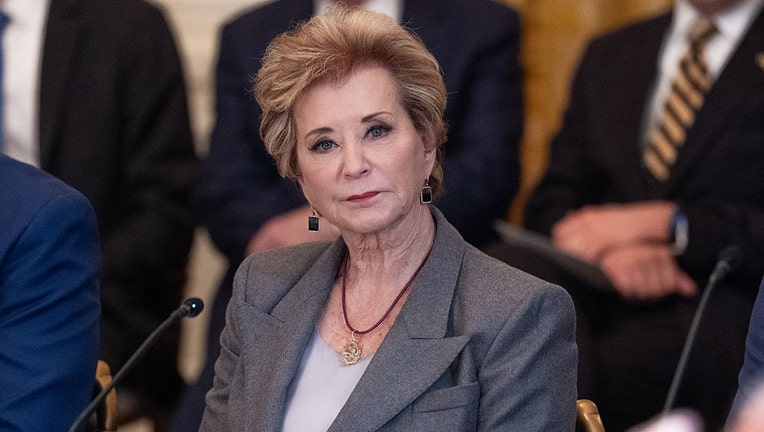
FILE-Linda McMahon, U.S. education secretary, participates in a "Saving College Sports" roundtable in the East Room of the White House in Washington, D.C. on Friday, March 6, 2026. (Aaron Schwartz/Bloomberg via Getty Images)
Education Secretary Linda McMahon defended her actions to dismantle the Department of Education in a hearing with senators earlier this week.
McMahon’s appearance on Capitol Hill on April 28 was intended to explain the White House plan on education spending for the 2027 fiscal year.
McMahon education hearing on Capitol Hill
Dig deeper:
Several key issues were addressed during the hearing, including student loans, protecting civil rights, federal programs for low-income students, federal spending for special education.
NPR reported that the Trump administration's budget proposal includes $16 billion for the Individuals with Disabilities Education Act (IDEA), a federal law that guarantees students with disabilities a free public education.
RELATED: Student loan repayment plan applications reopened by Education Department: What to know
When asked by senators about plans to manage special education programs, Education Secretary Linda McMahon committed to transitioning oversight and enforcement of IDEA to other federal agencies to dismantle the Department of Education.
McMahon also explained at the heading that the Education Department continues to make decisions, and the departments of Labor and Health and Human Services are two possible landing spots to manage special education.
Another key office at the Department of Education that guarantees schools adhere to federal disability law is the Office for Civil Rights (OCR).
RELATED: Trump signs order to 'begin eliminating' Department of Education
NPR reported that the department assesses discrimination complaints from students, including based on race, sex, and national origin. However, cases involving students with disabilities have made up the biggest share of its probes.
The Trump administration’s new budget proposes cutting funding for OCR by 35%, but McMahon stated that she wouldn’t support that in response to questions from Sen. Chris Murphy. NPR noted that the administration fired over half of OCR's lawyers and staff in March 2025. And seven of 12 regional OCR offices were shut down.
Programs for low-income students received an ample amount of attention at the hearing.
The Federal TRIO Programs (TRIO) are federal outreach and student services programs. TRIO includes eight programs aimed to serve and assist low-income individuals, first-generation college students, and individuals with disabilities to progress through the academic pipeline from middle school to postbaccalaureate programs, according to the Department of Education website.
RELATED: Is FAFSA part of the Education Department? And other things to know
Big picture view:
McMahon also faced questions about the Education Department’s plans for student loans. Approximately $1.7 trillion in student loans is managed by the federal government and the tens of thousands of borrowers who are behind on their payments. Many student loan borrowers are in limbo with the Department of Education transitioning management of these tasks to the Treasury Department.
Meanwhile, millions of other student loan borrowers are also facing uncertainty, after the Biden administration Saving on a Valuable Education plan (SAVE) , a student loan repayment plan some borrowers used, ended after the Education Department announced on Dec. 9, 2025 it reached a proposed agreement to end the program.
NPR added that a new repayment plan for student loan borrowers is expected to launch in July, but McMahon admitted at the hearing the situation is fluid.
The Source: Information for this story was provided by NPR, the Department of Education’s website, and previous FOX Local reporting. This story was reported from Washington, D.C.