

What is Code Purple air quality? What Code Orange, Red and Purple mean
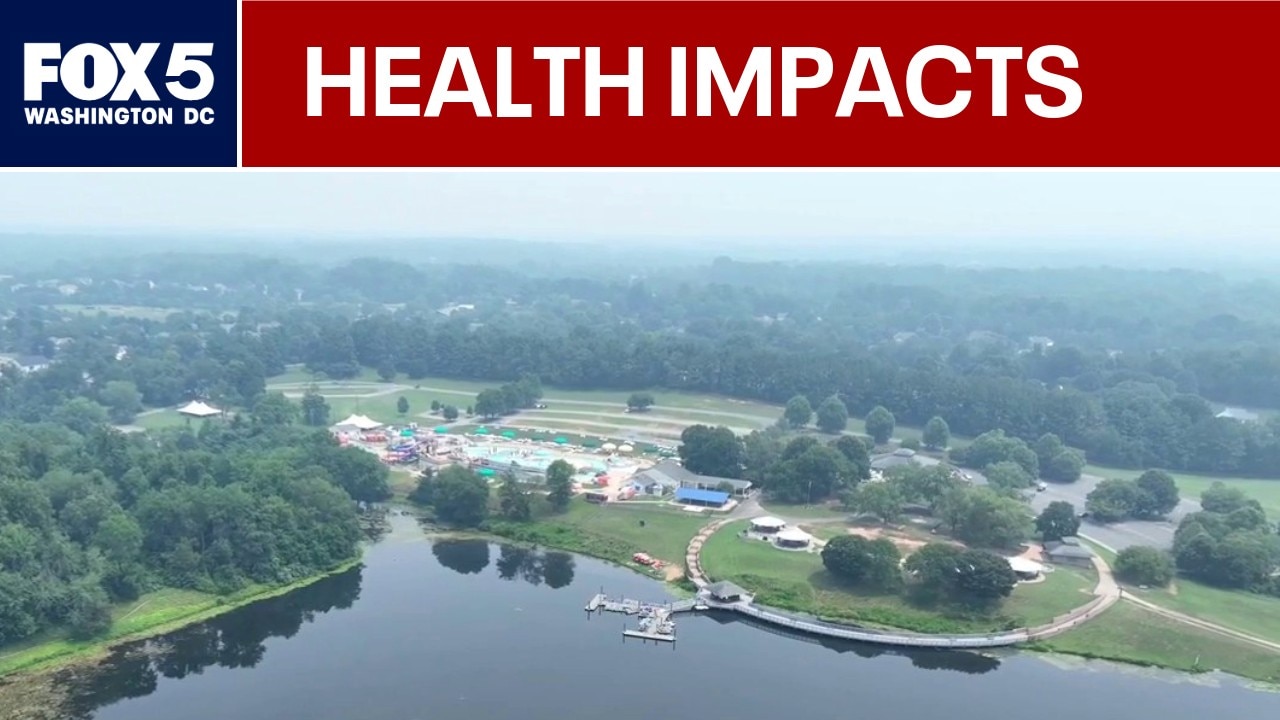
Doctors recommend staying indoors amid poor air quality
Doctors are recommending that people stay indoors, and seal their homes and cars amid poor air quality in the D.C. region.
WASHINGTON, D.C. - Wildfire smoke can push air quality into dangerous territory quickly, triggering color-coded alerts that range from Code Orange to Code Red, Code Purple and even Code Maroon.
What we know:
The U.S. Air Quality Index, or AQI, is the EPA’s system for reporting how clean or polluted outdoor air is and what health effects people should be aware of. The higher the AQI number, the greater the level of pollution and health concern.
The AQI is divided into six color-coded categories: Green, Yellow, Orange, Red, Purple and Maroon. Green is the cleanest category, while Maroon is considered hazardous.
Code Orange and Code Red are two of the most common alerts people see during wildfire smoke, ozone or fine particle pollution events.
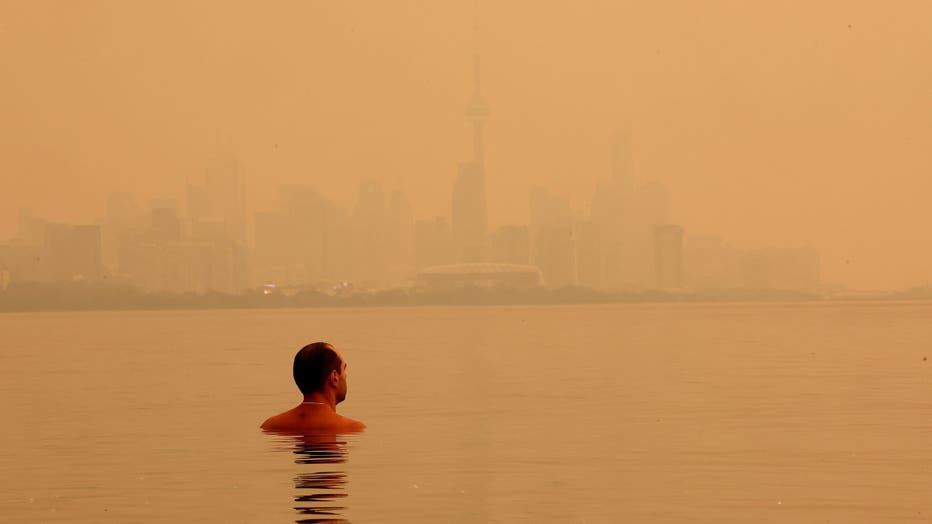
TORONTO, ON- JULY 15 - A swimmer checks out the view of the smoke from Northern Ontario forest fires that has the City of Toronto skyline shrouded in haze as viewed from Humber Park West in Toronto. July 15, 2026. Steve Russell/Toronto Star (Steve Ru
What does Code Orange mean?
Code Orange means the air is "unhealthy for sensitive groups."
That category covers AQI values from 101 to 150. At that level, members of sensitive groups may experience health effects, while the general public is less likely to be affected.
Sensitive groups can include:
- Children
- Older adults
- People with asthma
- People with heart disease
- People with lung disease
- People who are active outdoors
- People who work outside
During a Code Orange alert, sensitive groups should reduce prolonged or heavy outdoor exertion. AirNow says that for particle pollution, sensitive groups include people with heart or lung disease, older adults and children.
The D.C. region is under a Code Orange Air Quality Alert for Thursday, July 16. The alert covered the District of Columbia, suburban Maryland and Northern Virginia, with officials warning that pollution levels could become unhealthy for sensitive groups.
What does Code Red mean?
Code Red means the air is "unhealthy."
That category covers AQI values from 151 to 200. At that level, some members of the general public may experience health effects, while sensitive groups may experience more serious health effects.
During a Code Red alert, everyone should reduce exposure to air pollution. Sensitive groups should be especially careful and avoid prolonged or heavy outdoor exertion.
Pennsylvania was under a statewide Code Red Air Quality Action Day on Thursday because of wildfire smoke from Canada and Minnesota. The alert was issued for fine particle pollution, also known as PM2.5.
What does Code Purple mean?
Code Purple means the air is very unhealthy.
At this level, everyone should limit outdoor activity, even people without known health conditions.
Sensitive groups should avoid spending time outdoors if possible. That is especially important during wildfire smoke events, when fine particle pollution can get deep into the lungs and make breathing harder.
What does Code Maroon mean?
Code Maroon means the air is hazardous.
This is the most serious AQI category. During Code Maroon conditions, everyone should avoid outdoor activity as much as possible and stay indoors with windows and doors closed.
RELATED: Code Red air quality alert in effect across Pennsylvania due to Canadian wildfire smoke
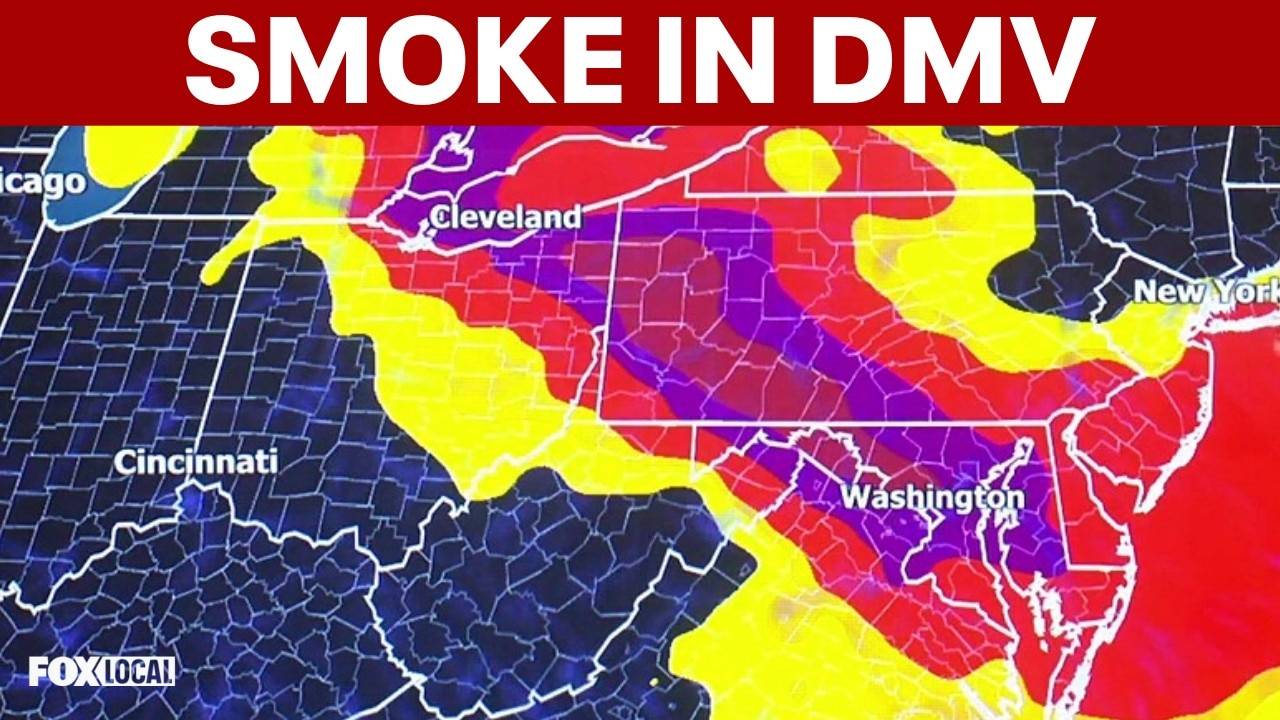
DC region under code red, purple air quality alerts from wildfire smoke
Haze and smoke from Canadian wildfires are creating unhealthy air across the D.C. region, with code red and code purple air quality alerts in effect for parts of the DMV. FOX 5’s team coverage breaks down the smoky conditions, health concerns, commute impacts and safety tips for people heading outside, especially children, older adults, pregnant women and those with respiratory conditions.
Code Orange vs. Code Red vs. Code Purple
The main difference is the level of risk.
Code Orange mainly affects sensitive groups.
Code Red is unhealthy for everyone.
Code Purple is very unhealthy for everyone.
Code Maroon is hazardous and considered an emergency-level air quality concern.
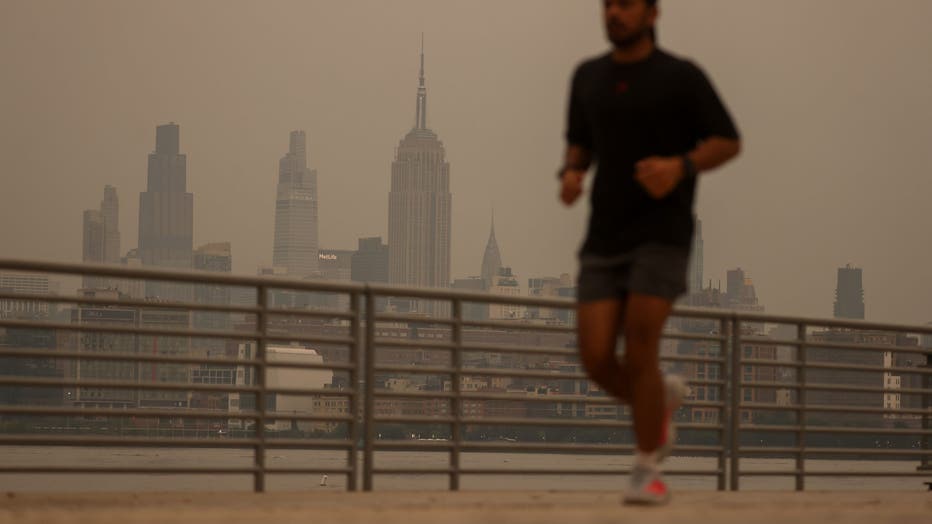
Smoke from wildfires in Canada shrouds the Manhattan skyline at sunrise in Jersey City, New Jersey, US, on Thursday, July 16, 2026. Smoke from hundreds of Canadian wildfires has turned skies yellow-gray across the Great Lakes and Northeast as the jet
Dig deeper:
Why wildfire smoke affects air quality
Wildfire smoke can carry fine particle pollution, also called PM2.5.
Those particles are small enough to get deep into the lungs and can make breathing harder, especially for people with asthma, COPD, heart disease and other health conditions.
That is why wildfire smoke can trigger air quality alerts hundreds or even thousands of miles from the fire itself.
How to check your local air quality
Air quality can vary by neighborhood and change throughout the day.
You can check current conditions through AirNow.gov, local environmental agencies or weather alerts from the National Weather Service.
What should you do during an air quality alert?
What you can do:
During a Code Red, Code Purple or Code Maroon air quality alert, limit time outside as much as possible.
Other ways to reduce exposure include:
- Keep windows and doors closed.
- Use air conditioning on recirculate.
- Avoid outdoor workouts.
- Keep car windows closed and use recirculated air.
- Avoid adding more pollution by postponing lawn mowing, grilling or unnecessary driving.
- Follow your asthma or COPD action plan if you have one.
- Contact a health care provider if symptoms get worse or do not go away.
While poor air quality can be especially concerning for children, older adults and people who are pregnant or have respiratory conditions, Code Purple alerts can mean the air is unhealthy for everyone.
The Source: This article was written using information from AirNow, the National Weather Service, FOX 29 reporting and the Pennsylvania Department of Environmental Protection.