


NASA astronaut sets new US record with 371 days in space
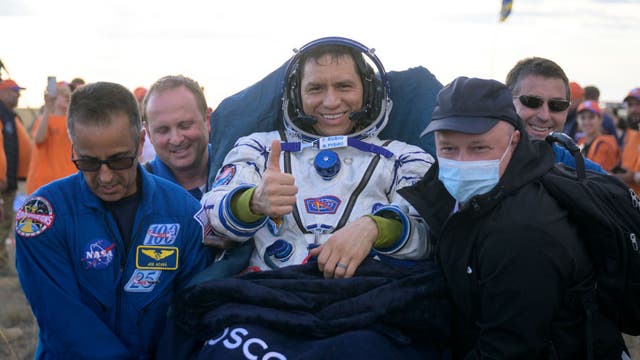
A NASA astronaut now holds the record for the longest U.S. spaceflight after returning to Earth Wednesday, but the feat did not come voluntarily.
A NASA astronaut now holds the record for the longest U.S. spaceflight after returning to Earth Wednesday, but the feat did not come voluntarily.

American astronaut ends record spaceflight
An American astronaut?s record-breaking spaceflight came to an end when he and his crew landed in Kazakhstan on Wednesday, September 27, NASA said. (Credit: NASA via Storyful)
An American astronaut?s record-breaking spaceflight came to an end when he and his crew landed in Kazakhstan on Wednesday, September 27, NASA said. (Credit: NASA via Storyful)


Harvest Moon: Last Supermoon of 2023 happens Friday
The Harvest Supermoon will appear bright starting on Thursday before reaching peak illumination Friday morning.
The Harvest Supermoon will appear bright starting on Thursday before reaching peak illumination Friday morning.

3 astronauts back on Earth after being stuck in space for a year
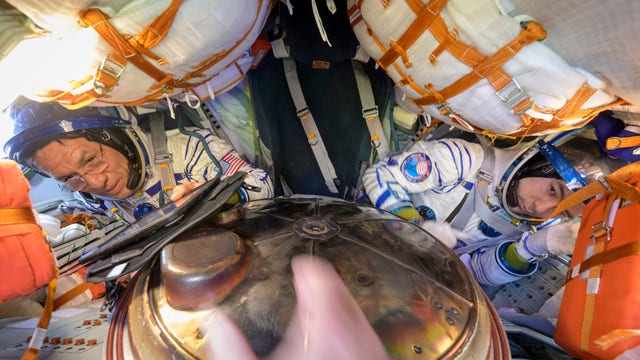
One of the astronauts that returned to Earth Wednesday is a NASA astronaut, who now holds the record for the longest U.S. spaceflight as a result of the unexpected extended stay.
One of the astronauts that returned to Earth Wednesday is a NASA astronaut, who now holds the record for the longest U.S. spaceflight as a result of the unexpected extended stay.

Soyuz MS-23 astronauts return to earth
NASA astronaut Frank Rubio and Roscosmos cosmonauts Sergei Prokopyev and Dmitri Petelin have returned to earth with a parachute-assisted landing on the steppe of Kazakhstan. During his mission, Rubio broke the record for longest single spaceflight for a U.S. astronaut spending 371 consecutive days living and working aboard the microgravity laboratory. The mission all part of NASA?s Moon and Mars exploration approach, including lunar missions through NASA?s Artemis program.
NASA astronaut Frank Rubio and Roscosmos cosmonauts Sergei Prokopyev and Dmitri Petelin have returned to earth with a parachute-assisted landing on the steppe of Kazakhstan. During his mission, Rubio broke the record for longest single spaceflight for a U.S. astronaut spending 371 consecutive days living and working aboard the microgravity laboratory. The mission all part of NASA?s Moon and Mars exploration approach, including lunar missions through NASA?s Artemis program.

NASA planning new spacecraft that will deorbit International Space Station
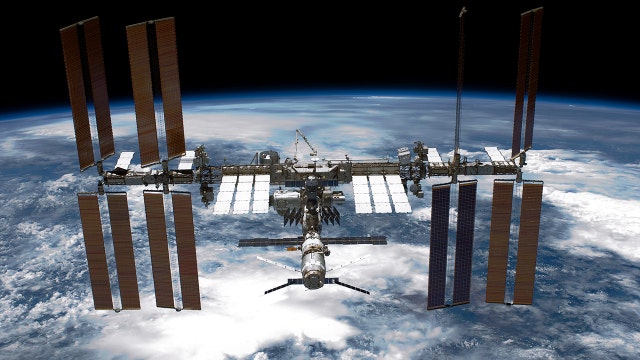
NASA said the station will be deorbited in a controlled manner to avoid populated areas.
NASA said the station will be deorbited in a controlled manner to avoid populated areas.

Northern Lights activity to increase, include auroras further south due to escalating Sun activity
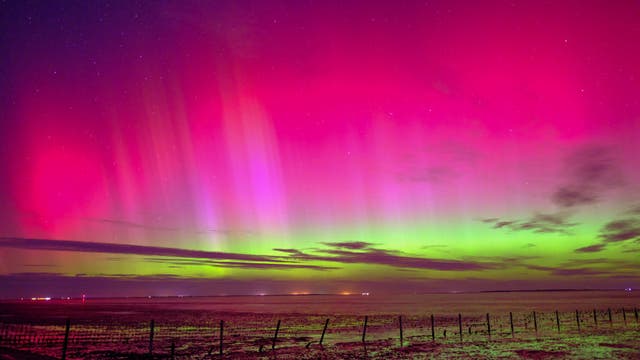
Skygazers in the northern U.S. will want to stay tuned for more aurora light forecasts in the coming years as peak solar activity is expected in 2025 during the Solar Cycle 25.
Skygazers in the northern U.S. will want to stay tuned for more aurora light forecasts in the coming years as peak solar activity is expected in 2025 during the Solar Cycle 25.
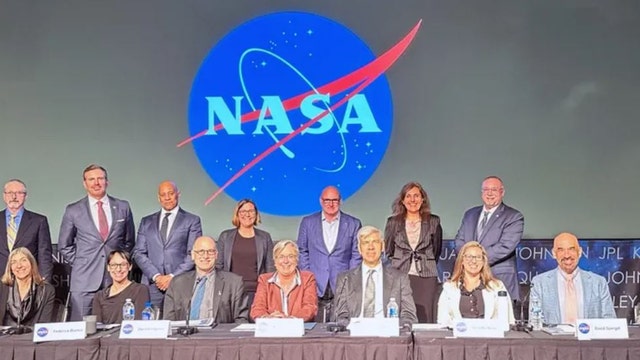

NASA reveals latest weapon to 'search the heavens' for UFOs, aliens
According to a NASA study, artificial intelligence will be key if NASA tries to find scientifically provable alien life and the existence of UFOs.
According to a NASA study, artificial intelligence will be key if NASA tries to find scientifically provable alien life and the existence of UFOs.

NASA collects asteroid samples from deep space
NASA has collected its first-ever asteroid samples from deep space. Daniel Brown at Nottingham Trent University joined LiveNOW from FOX's Josh Breslow to discuss the significance of the mission.
NASA has collected its first-ever asteroid samples from deep space. Daniel Brown at Nottingham Trent University joined LiveNOW from FOX's Josh Breslow to discuss the significance of the mission.
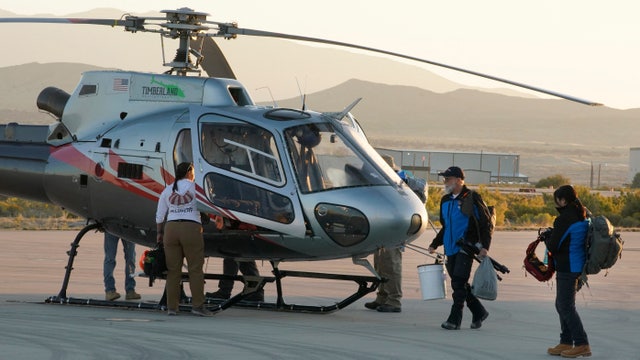

Watch: NASA's first asteroid samples land in Utah desert
Scientists believe the capsule holds at least a cup of rubble from the carbon-rich asteroid known as Bennu, but won’t know for sure until the container is opened.
Scientists believe the capsule holds at least a cup of rubble from the carbon-rich asteroid known as Bennu, but won’t know for sure until the container is opened.

NASA brings asteroid samples back to Earth
Scientists estimate the capsule holds at least a cup of rubble from the carbon-rich asteroid known as Bennu, but won?t know for sure until the container is opened.
Scientists estimate the capsule holds at least a cup of rubble from the carbon-rich asteroid known as Bennu, but won?t know for sure until the container is opened.
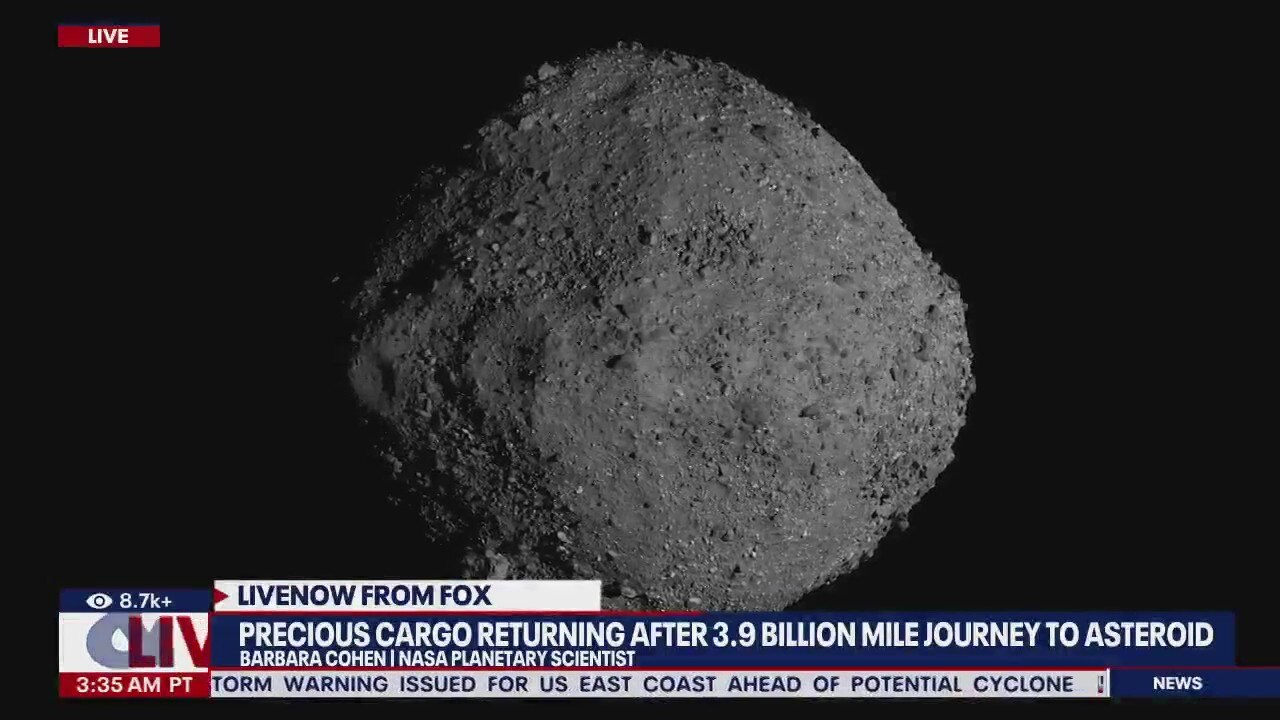
NASA spacecraft will deliver asteroid sample
Planet Earth is about to receive a special delivery — the biggest sample yet from an asteroid. A NASA spacecraft will fly by Earth on Sunday and drop off what is expected to be at least a cupful of rubble it grabbed from the asteroid Bennu, closing out a seven-year quest. The sample capsule will parachute into the Utah desert as its mothership, the Osiris-Rex spacecraft, zooms off for an encounter with another asteroid. Scientists anticipate getting about a half pound (250 grams) of pebbles and dust, much more than the teaspoon or so brought back by Japan from two other asteroids. No other country has fetched pieces of asteroids, preserved time capsules from the dawn of our solar system that can help explain how Earth — and life — came to be. Sunday’s landing concludes a 4 billion-mile (6.2-billion-kilometer) journey highlighted by the rendezvous with the carbon-rich Bennu, a unique pogo stick-style touchdown and sample grab, a jammed lid that sent some of the stash spilling into space, and now the return of NASA’s first asteroid samples. “I ask myself how many heart-pounding moments can you have in one lifetime because I feel like I might be hitting my limit,” said the University of Arizona’s Dante Lauretta, the mission’s lead scientist.
Planet Earth is about to receive a special delivery — the biggest sample yet from an asteroid. A NASA spacecraft will fly by Earth on Sunday and drop off what is expected to be at least a cupful of rubble it grabbed from the asteroid Bennu, closing out a seven-year quest. The sample capsule will parachute into the Utah desert as its mothership, the Osiris-Rex spacecraft, zooms off for an encounter with another asteroid. Scientists anticipate getting about a half pound (250 grams) of pebbles and dust, much more than the teaspoon or so brought back by Japan from two other asteroids. No other country has fetched pieces of asteroids, preserved time capsules from the dawn of our solar system that can help explain how Earth — and life — came to be. Sunday’s landing concludes a 4 billion-mile (6.2-billion-kilometer) journey highlighted by the rendezvous with the carbon-rich Bennu, a unique pogo stick-style touchdown and sample grab, a jammed lid that sent some of the stash spilling into space, and now the return of NASA’s first asteroid samples. “I ask myself how many heart-pounding moments can you have in one lifetime because I feel like I might be hitting my limit,” said the University of Arizona’s Dante Lauretta, the mission’s lead scientist.


NASA OSIRIS-REx spacecraft ready for special delivery of asteroid sample in Utah on Sunday
NASA's OSIRIS-REx spacecraft is scheduled to drop off rocks, dust and dirt it collected from the asteroid Bennu in 2020.
NASA's OSIRIS-REx spacecraft is scheduled to drop off rocks, dust and dirt it collected from the asteroid Bennu in 2020.

OSIRIS-REx asteroid sample return test run in Utah
Video provided by NASA shows the rehearsal of the helicopter transport of the OSIRIS-REx Sample Return Capsule to a clean room area in Utah. The spacecraft is set to drop off a sample from asteroid Bennu on Sept. 24.
Video provided by NASA shows the rehearsal of the helicopter transport of the OSIRIS-REx Sample Return Capsule to a clean room area in Utah. The spacecraft is set to drop off a sample from asteroid Bennu on Sept. 24.
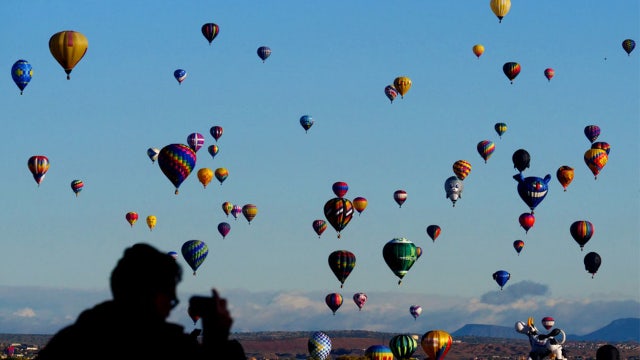

October solar eclipse 'ring of fire' will happen during Albuquerque International Balloon Fiesta
The Albuquerque International Balloon Fiesta is one of two locations where NASA will be hosting live coverage of the annular solar eclipse on Oct. 14. More than 500 balloons will take flight during the eclipse.
The Albuquerque International Balloon Fiesta is one of two locations where NASA will be hosting live coverage of the annular solar eclipse on Oct. 14. More than 500 balloons will take flight during the eclipse.
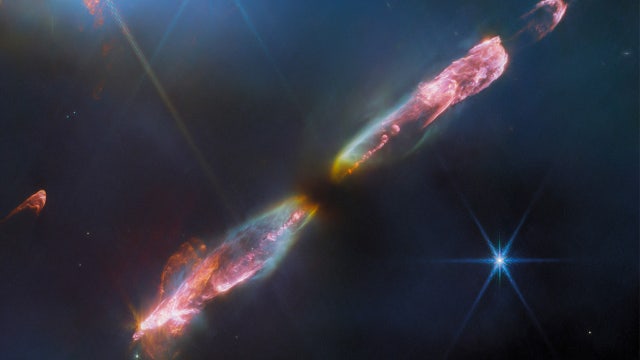

James Webb telescope captures colorful bursts of gas, dust in new image
The star is a few tens of thousands of years old, a baby compared to our sun which is estimated to be about 4.5 billion years old.
The star is a few tens of thousands of years old, a baby compared to our sun which is estimated to be about 4.5 billion years old.
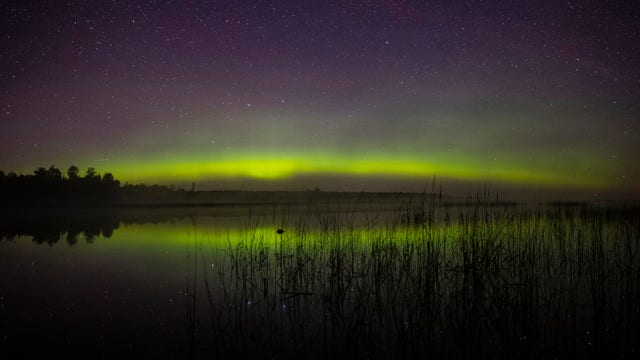

Dazzling auroras could be on display from Seattle to Boston Tuesday during geomagnetic storm watch
Auroras lights could be visible low on the horizon for the U.S. Northern Tier, including in Seattle, Great Falls, Des Moines, Minneapolis, Chicago and Boston. Here's why.
Auroras lights could be visible low on the horizon for the U.S. Northern Tier, including in Seattle, Great Falls, Des Moines, Minneapolis, Chicago and Boston. Here's why.
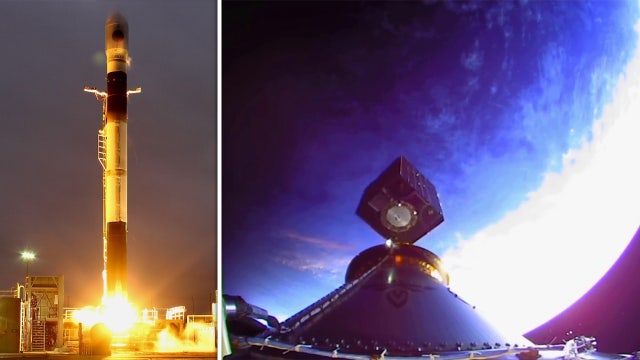

Space Force sets new record with surprise satellite launch
The U.S. Space Force says it set a record for sending a satellite into space on short notice – just a 24-hour timeframe, instead of weeks or months – calling it a "major advancement" of its capabilities.
The U.S. Space Force says it set a record for sending a satellite into space on short notice – just a 24-hour timeframe, instead of weeks or months – calling it a "major advancement" of its capabilities.

NASA releases UFO report with no evidence of extraterrestrial origin
NASA Administrator Bill Nelson said the agency wants to shift the conversation about UFOs “from sensationalism to science.”
NASA Administrator Bill Nelson said the agency wants to shift the conversation about UFOs “from sensationalism to science.”
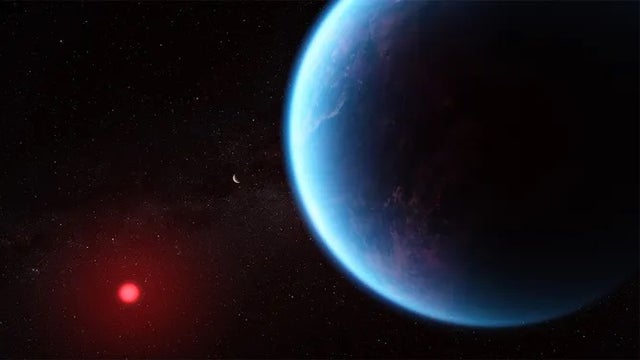

Webb telescope detects possible signs of life on distant planet
Located about 120 light-years from Earth in the constellation Leo, K2-18 b lies within the habitable zone of a nearby star.
Located about 120 light-years from Earth in the constellation Leo, K2-18 b lies within the habitable zone of a nearby star.