

Wildfire in Georgia underscores climate change impact in Eastern US
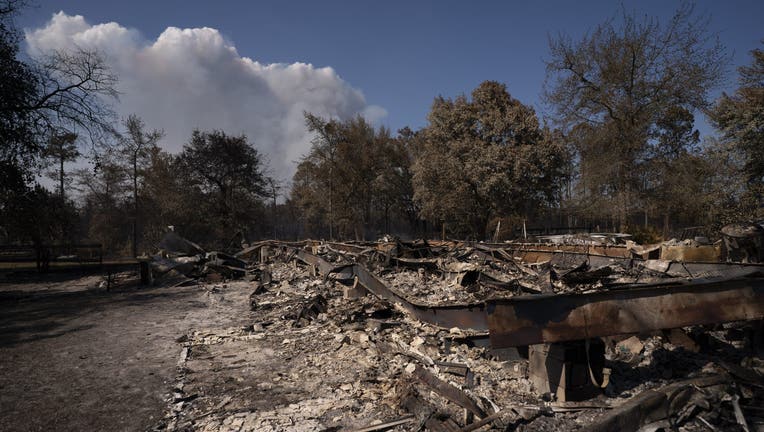
Smokes rises from the Brantley Highway 82 Fire on April 23, 2026 in Atkinson, Georgia. The wildfire is one of many burning in the southeastern United States. (Photo by Sean Rayford/Getty Images)
As two significant brush fires have been burning in Georgia for the past week, experts say wildfires are becoming more intense and frequent on the East Coast.
No direct cause has been identified for the fires in Georgia, but according to a report from the Associated Press, researchers say a number of factors, including climate change, are causing fuel to dry out and become more flammable.
Two major contributing factors
In 2024, Hurricane Helene blew through 13,954 square miles just in Georgia alone, taking down more than 26 million tons of pine and 30 million tons of hardwood, according to a 2024 University of Georgia and Georgia Forestry Commission timber damage assessment.
Advisories to watch for fires were issued in the wake of the post-Helene fuel buildup, but the dry air also increases the likelihood of fires. Lack of rain, less humidity and the dry air itself adds on with the higher temperatures of the season.
Dig deeper:
According to a 2023 study by the University of Florida fire ecologists Victoria Donovan and Carissa Wonkka, the number of large fires and the amount of land being burnt by them have increased the most in the Southeast U.S. from 1984 to 2020.
The two found that even though wildfires are bigger and more noticeable out west, there are more people in the way of wildfires in the east.
What they're saying:
"The fires in the East historically and today are a lot smaller than in the Western United States, so they might not always grab as much attention as those out West. But we’re starting to see now this shift in dynamics in the East, we’re starting to quantify it," Donovan said Thursday. "Even though the changes that we’re seeing in the East are much smaller than we’re quantifying out West, we think it’s extremely important to start to get ahead of this problem now."
"As we warm … the atmosphere’s ability to suck moisture out of dead fuel, not live fuel, but dead fuel, increases almost exponentially as temperature increases," said fire scientist Mike Flannigan of Thompson Rivers University in British Columbia. "The drier the fuel, the easier it is for a fire to start, means more fuel dried and is available to burn, which leads to higher intensity fires that are difficult to impossible to extinguish."
The backstory:
The Georgia brush fires in the have grown to more than 34,000 acres. More than 50 structures have been destroyed as rapidly growing wildfires burned through several acres near the Florida-Georgia state line.
Florida has battled over 130 wildfires that have burned 39 square miles in the northern part of the state. Smoke has drifted as far away as Jacksonville and Atlanta.
The Source: This story was written with information provided by the Associated Press. This story was reported from Orlando.