

New Zealand Air Force rescues US researchers from Antarctica amid extreme cold, darkness
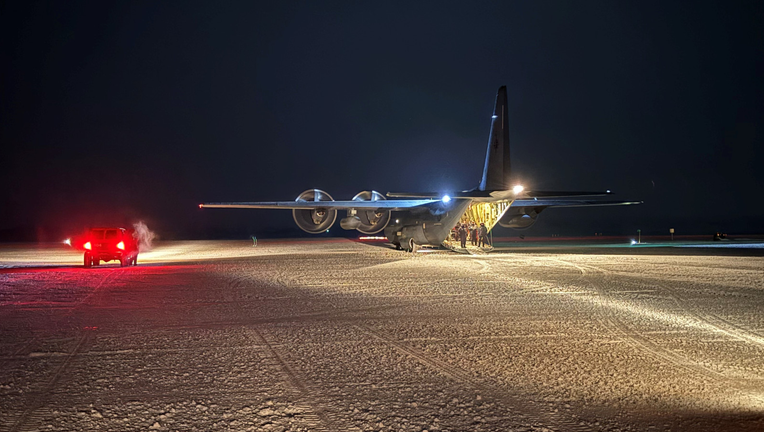
A Royal New Zealand Air Force C-130 Hercules on the ice runway at McMurdo Station during a midwinter medical evacuation from Antarctica. (Credit: NZ Air Force)
The Royal New Zealand Air Force said it helped evacuate three U.S. researchers who needed medical attention from Antarctica amid challenging conditions.
What we know:
According to the country's military, the United States' National Science Foundation requested the evcuation because staff based at the United States' McMurdo Station were unable to receive the medical care.
One person required urgent medical care, and two others who also needed medical attention were taken on the flight.
What we don't know:
The military didn't elaborate on the researchers' medical condition and didn't reveal their names.
What they're saying:
Air Component Commander Air Commodore Andy Scott said that freezing, unpredictable weather, and landing on ice in darkness make mid-winter flights to Antarctica among the most challenging missions RNZAF air crews undertake.
"The crew can only attempt the flight after detailed analysis of the weather and airfield state. The United States Antarctic Program Winter Team must physically create the runway before we can depart by ensuring the ice is groomed and suitable for landing," he said in a news release. "Although they determine it is safe, it's still an extremely challenging environment to fly in on Night Vision Goggles due to the extreme weather conditions, which are highly changeable at this time of year and makes accurate forecasting a challenge.
"This, coupled with there being no airfields available to divert to once the aircraft is past a certain point south adds to the risk, so these missions are not taken lightly.
Dig deeper:
The aircraft, carrying New Zealand Defense Force medical personnel—including a medical officer (doctor)—flew to Antarctica to care for the patients during the return flight.
It had been pre-positioned from Auckland to Christchurch on Sunday afternoon, where the crew remained on standby, waiting for a suitable weather window to complete the mission.
By Tuesday afternoon, the crew determined conditions were favorable and launched the flight, working through the night to carry out the operation.
Upon arrival in Antarctica, the aircraft underwent "hot refuelling"—a procedure where the engines are kept running to prevent freezing—before departing back to Christchurch.
Including the brief time spent on the ice, the medical evacuation took approximately 19.5 hours. The aircraft returned to Christchurch this morning.
The Source: The information in this story comes from a news release issued by the New Zealand Defense Force. This story was reported from Los Angeles.