

Trump delays tariffs on upholstered furniture, kitchen cabinets

Trump's latest slew of tariffs go into effect
The American Institute for Economic Research's Dave Hebert joins LiveNOW's Andrew Craft to break down President Trump's latest tariffs.
President Donald Trump has delayed some of the tariffs he imposed on upholstered furniture and kitchen cabinets and vanities because of ongoing trade talks.
It’s the latest roller coaster of Trump's tariff wars since he returned to office last year. The Republican president has instituted a broad swath of taxes on imported goods, sometimes without warning before delaying or pulling back from them just as abruptly.
Furniture, cabinet tariffs delayed
By the numbers:
The order keeps in place a 25% tariff he imposed in September on upholstered furniture and kitchen cabinets and vanities, but delays for another year a 30% tariff on upholstered furniture and 50% tariff on kitchen cabinets and vanities.
RELATED: Stock up now on these items before prices jump in early 2026, Wells Fargo says
What they're saying:
Trump has said the tariffs on furniture are needed to "bolster American industry and protect national security."
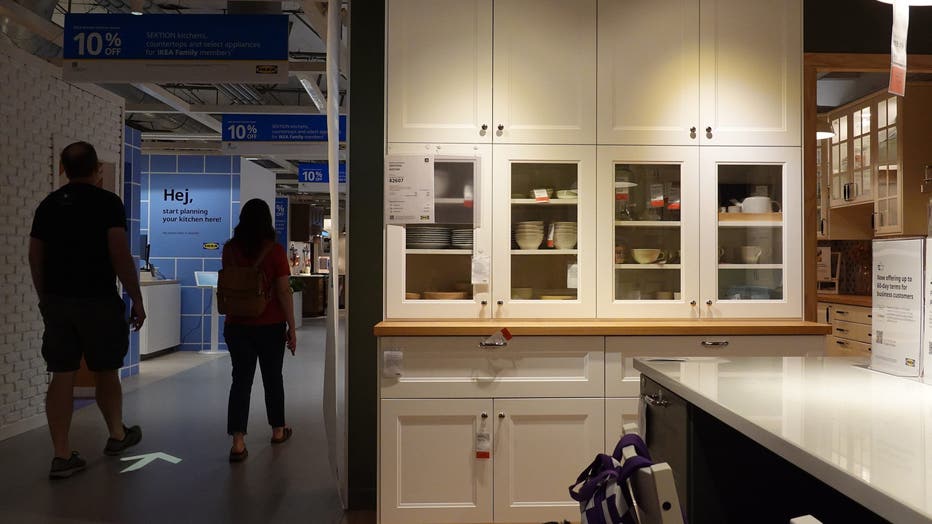
Kitchen cabinets are displayed at an IKEA store on September 26, 2025 in Emeryville, California. (Photo by Justin Sullivan/Getty Images)
According to the November inflation report, living room, kitchen and dining room furniture prices increased 4.6% compared to a year ago.
Italian pasta tariffs
The Trump administration is also scaling back on a steep tariff proposed on Italian pasta that would have put the rate at 107%, a big hit for an industry that exports $787 million worth of pasta to the U.S. each year.
RELATED: Trump administration scales back proposed tariffs on Italian pasta makers following review
The original proposed tariffs would have doubled the cost of a plate of pasta for American families, "opening the door to Italian-sounding products and penalizing the authentic quality of Made in Italy," industry advocates said.
The Commerce Department now says the rates will be lowered to between 2.26% and 13.89% for pasta makers, with a final decision in March.
Are Trump’s tariffs working?
Big picture view:
Trump’s higher tariffs are certainly raising money. They’ve raked in more than $236 billion through November — much more than in years past. But they still account for just a fraction of the federal government’s total revenue, while disrupting global commerce and straining the budgets of consumers and businesses worldwide. And they haven’t raised nearly enough to justify the president’s claim that tariff revenue could replace federal income taxes — or allow for windfall dividend checks for Americans.
The U.S. trade deficit, meanwhile, has fallen significantly since the start of the year. The trade gap peaked to a monthly record of $136.4 billion in March, as consumers and businesses hurried to import foreign products before Trump could impose his tariffs on them. The trade gap narrowed to $52.8 billion in September, the latest month for which data is available.
The Source: This report includes information from The Associated Press.