

Trump suspends de minimis exemption for low-value imports: What it means for shoppers

President Trump on trade talks & tariffs
President Trump met with VA officials on Wednesday. Trump took questions from the White House after signing a congressional bill.
President Donald Trump signed an executive order Wednesday eliminating duty-free treatment for imported goods worth $800 or less, ending a long-standing rule that made global e-commerce cheaper and faster for U.S. consumers.
The order, effective August 29, suspends the so-called "de minimis" exemption for commercial shipments, forcing companies that rely on low-value deliveries to pay duties and face increased customs scrutiny. The White House says this sweeping change is part of Trump’s broader efforts to combat synthetic opioid trafficking, unfair trade practices, and what officials call a "catastrophic loophole" harming U.S. workers.
The move builds on Trump’s earlier decision in May to block duty-free shipments from China and Hong Kong—a policy shift that already dealt a major blow to ultra-low-cost retailers like Shein and Temu. With Wednesday’s order, the crackdown now applies globally.
Why is the U.S. suspending the de minimis exemption?
The backstory:
The de minimis exemption, codified in U.S. law, has long allowed international retailers to send packages under $800 into the U.S. without paying import duties. Originally intended to ease customs burdens and streamline personal orders, the rule became a cornerstone of global e-commerce—particularly for direct-to-consumer platforms shipping from Asia.
But according to the Trump administration, the exemption has been widely exploited. The White House fact sheet claims the policy was abused by bad actors to ship counterfeit goods, dangerous items, and even narcotics into the country.
Officials cite that 90% of all cargo seizures by U.S. Customs and Border Protection (CBP) in fiscal year 2024 originated as de minimis shipments.
What they're saying:
In a White House fact sheet, officials wrote that Trump’s order is aimed at closing a "catastrophic loophole" that "funnel[s] deadly synthetic opioids as well as other unsafe or below-market products" into the U.S.
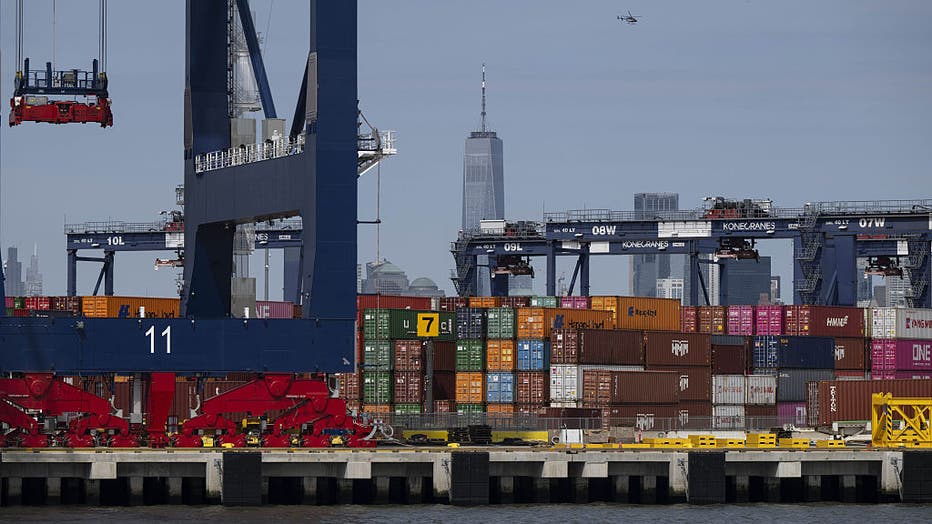
FILE - Shipping containers are stacked at the Port of Newark with the Manhattan skyline in the background, as U.S. trade policy shifts under a new executive order suspending duty-free treatment for low-value imports. (Photo by Mostafa Bassim/Anadolu via Getty Images)
The administration said, "Between 2015 and 2024, the volume of de minimis shipments entering the U.S. increased from 134 million shipments to over 1.36 billion shipments," adding that in FY24, 98% of narcotics seizures and 97% of intellectual property seizures were linked to these shipments.
Officials also emphasized that the policy shift is part of Trump’s emergency declarations to tackle threats to national security, the economy, and the drug epidemic.
What's next:
Retailers that depend on low-cost international shipping may face higher expenses and delays, likely passing those costs to American shoppers. With over 300 million de minimis shipments already recorded in the first half of fiscal year 2025, analysts expect widespread disruption in how affordable foreign goods move into the U.S.
The White House says it will allow a six-month phase-in period for a simplified duty system before shifting entirely to ad valorem tariffs. Meanwhile, Trump has signed a law permanently repealing the de minimis rule by 2027, though the executive order accelerates the timeline.
The Source: This report is based on a July 30 fact sheet issued by the White House and a review of President Trump’s executive order on suspending the de minimis exemption. Additional context was provided by U.S. Customs and Border Protection data and prior reporting on U.S. trade enforcement trends. The article also draws from court rulings and prior policy changes involving Chinese and Hong Kong shipments.