

Supreme Court temporarily allows Trump administration to use revamped voter database ahead of midterms
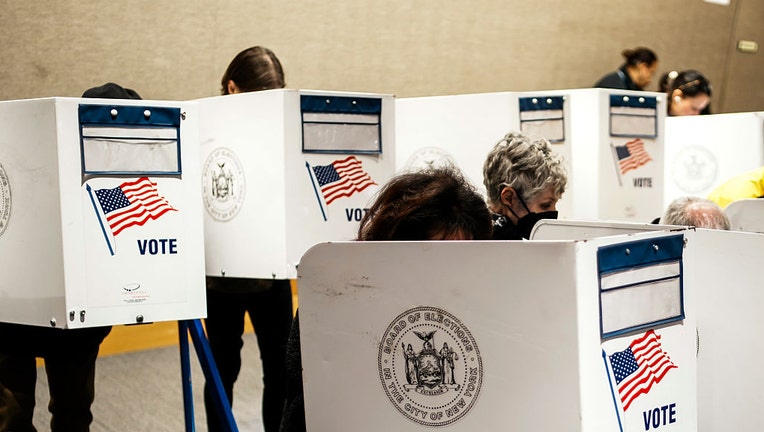
People take part in early voting at a polling center in the Manhattan borough of New York City on October 25, 2025. (Photo by ZAMEK/VIEWpress)
NEW YORK - The Supreme Court on Friday temporarily lifted restrictions on a controversial federal voter database ahead of November’s elections, handing President Donald Trump a victory in his effort to combat noncitizen voting.
The court's three liberal-leaning justices publicly dissented from the decision.
Why you should care:
The emergency order allows states, for now, to use the Department of Homeland Security program, called Systematic Alien Verification for Entitlements, or SAVE, in their efforts to verify the eligibility of voters on their rolls.
Voters consider AI risks ahead of midterm elections
We are learning more about the fight over data centers in the United States as LiveNOW’s Alexandra Goldberg speaks with AI expert and the CEO of Allata, Matt Rosen. This comes after state lawmakers like Virginia Gov. Abigail Spanberger and Maryland Gov.
States' use of the SAVE program is voluntary. The immediate impact on the upcoming midterms is likely limited because existing law blocks most states from systematically purging voters from their rolls within 90 days of an election, said David Becker, an election law expert who leads the Center for Election Innovation and Research.
RELATED: How to register to vote
He said since the program is voluntary and DHS itself has admitted the data is not perfect, "states may find this to be a useful tool used along with other tools to keep their lists up-to-date."
The court’s order puts on hold a federal judge’s June ruling that had deemed the Republican administration’s recently revamped version of SAVE illegal. U.S. District Court Judge Sparkle L. Sooknanan had blocked the use of the tool, saying it violated Americans’ privacy rights and could result in voters being wrongly removed from the rolls.
A federal appeals court let her order stand.
RELATED: Election 2026: What to know about the November midterm key races
But the Supreme Court majority found that a 1996 law explicitly allows DHS to get information about citizenship and immigration from other federal agencies. The federal government also has "an obligation to respond" to states seeking to verify citizenship.
"The order below prevents the Federal Government from using the program it believes is best suited to the task," the majority wrote in the unsigned order.
The White House did not immediately respond to a message seeking comment.
The other side:
Justice Ketanji Brown Jackson dissented, joined by Justices Elena Kagan and Sonia Sotomayor. The database has long been seen to fall under federal privacy laws, she wrote, and there are real risks that legitimate voter registrations could be mistakenly revoked.
"The harm caused by burdening or disenfranchising even a few lawful voters outweighs the nonexistent harm that the Government experiences when it is prevented from taking an action that it likely lacks the authority to take," Jackson wrote.
RELATED: Trump tells Republicans they ‘go to hell’ if they don’t vote in November
The plaintiffs and counsel team in the case called the ruling "profoundly disappointing" and said it puts "millions of Americans at risk of being unlawfully targeted by the administration’s unreliable voter purge database" before the midterms.
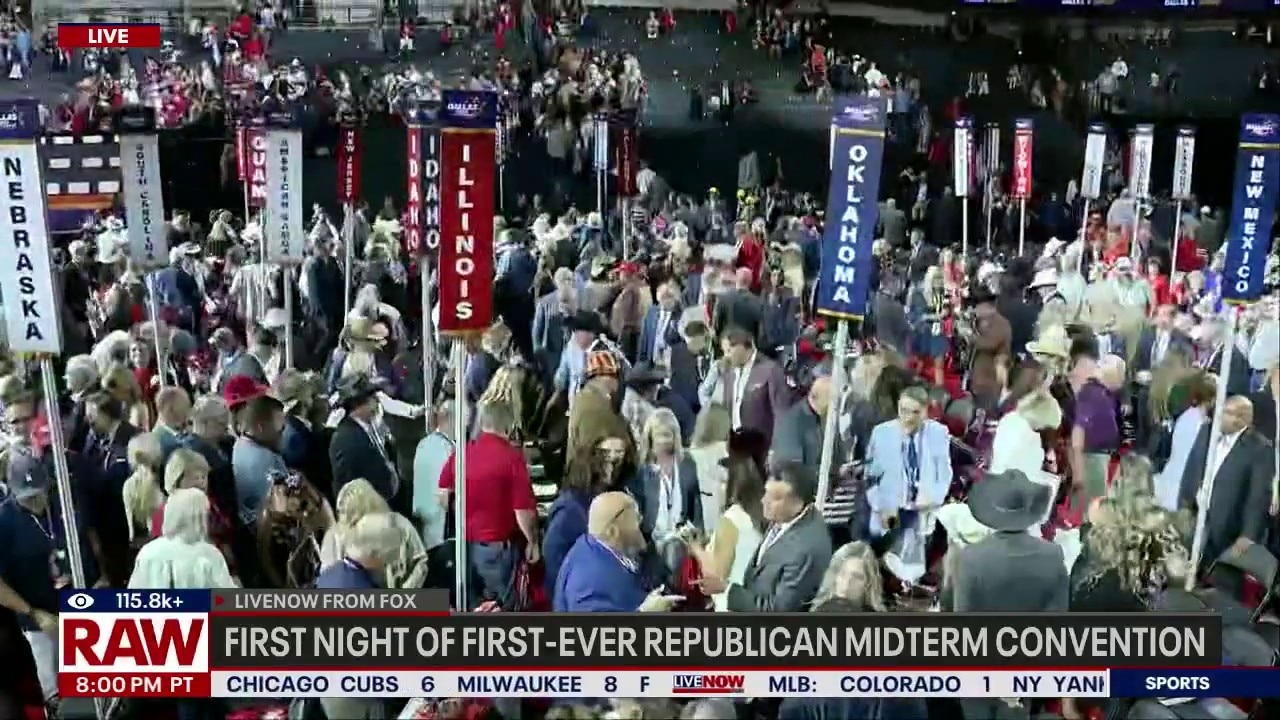
Trump promises $5,000 payout if GOP wins election
We watched President Donald Trump speak during the first day of the 2026 Republican Midterm Convention in Dallas. President Trump spoke for nearly two hours during his keynote speech. LiveNOW’s Alexandra Goldberg is speaking with GOP Strategist Andie Wong and PR Strategist Matt Shupe, who both had the chance to hear Trump speak in Dallas tonight.
"However, this case is not over," their statement read. "The D.C. district court ruled that the expanded SAVE program violated multiple laws. We will be doing everything in our power to protect Americans’ voting and privacy rights by ensuring that the district court decision stands."
The backstory:
The SAVE program was created under an immigration law mandating that DHS help federal, state and local agencies prevent government benefits from going to noncitizens. The Trump administration last year moved to significantly expand its search abilities. Since then, at least 67 million registrations have been scanned through the program, but critics worry it could end up purging valid voters from the rolls.
RELATED: Trump administration again asks Supreme Court to allow mail-ballot restrictions
Some registrants have already been wrongly flagged. In Travis County, Texas, for example, officials said they investigated 97 voters flagged by SAVE as apparent noncitizens and found that at least 10% of them — and likely up to 21% — were U.S. citizens. The county urged the Supreme Court to reject the administration’s appeal, while the state of Texas submitted its own brief defending the database.
Even though the use of the SAVE program has been blocked for months, the administration said in court filings that DHS officials have continued using Social Security Administration data "in certain cases to verify information and help determine whether illegal voting may have occurred."
DHS in August launched its own investigation to find noncitizen voters on state rolls, according to a federal whistleblower statement that said the effort is rushed, filled with errors and potentially violates state laws. DHS has defended that investigation as being conducted "diligently and professionally."
The effort to create a national voter list is among numerous steps Trump has taken during his second term to try to overhaul the way elections are run. Most of those steps have been blocked by various courts, in part because the Constitution gives states and Congress the authority to set election rules, but provides no such power to the president. In mid-September, the Supreme Court rejected a bid from Trump to restrict mail ballot procedures before the midterms.
Research shows that noncitizen voting, which is already illegal and punishable as a potential felony that could lead to deportation, is exceptionally rare. But Trump has remained fixated on the idea that massive numbers of noncitizens are voting in U.S. races.
The Source: The Associated Press contributed to this report. The story is based on a Supreme Court emergency order, lower-court rulings, court filings and statements from the plaintiffs. This story was reported from Los Angeles.