

Ocean Observatories Initiative dismantled by Trump administration: What to know
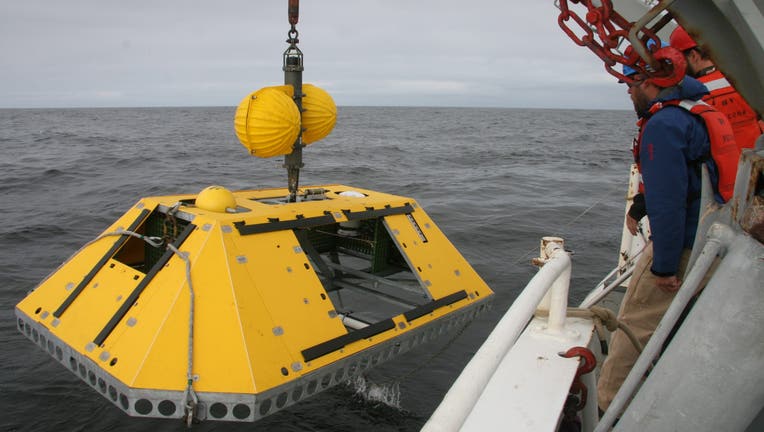
Ocean Observatories Initiative technicians ensure equipment is correctly deployed (Credit: Craig Risien, Oregon State University)
The Ocean Observatories Initiative, a sophisticated network of more than 900 ocean sensors that track everything from ocean circulation to climate change to extreme weather, is being dismantled by the Trump administration.
The project, which is funded by the independent federal agency the National Science Foundation, was supposed to run for another 15 to 20 years. Now, scientists and researchers who rely on the data are concerned about the timing as they prepare for a strong El Niño event along the Pacific coast.
Ocean Observatories Initiative ‘descoped’
What we know:
The National Science Foundation announced in May that it is "descoping" the OOI and will remove instruments from waters off Oregon, Washington, Alaska, North Carolina and Greenland by 2027.
RELATED: House votes to cut funding for WIC, program that feeds pregnant women and children
What we don't know:
It’s unclear who made the decision to dismantle the program, but scientists had seen warning signs as the Trump administration’s proposed 2026 budget included a 55% cut to the science foundation.
What they're saying:
Michael England, a spokesman for the National Science Foundation, told The New York Times the decision "aligns with N.S.F.’s wider strategy to have a nimbler approach to prioritizing support for evolving scientific priorities and emerging technologies as well as a deliberate approach to smart life cycle management within its portfolio of research infrastructure."
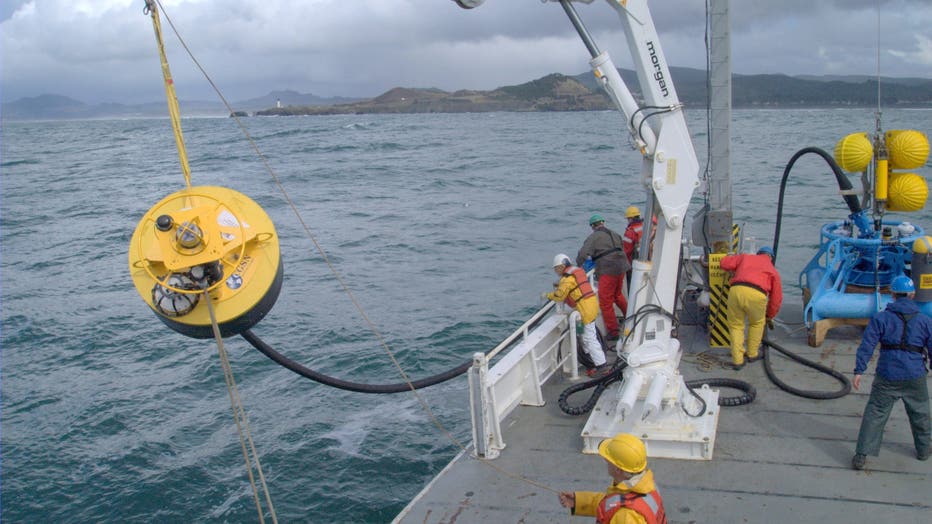
Ocean Observatories Initiative crew deploys buoys. Credit: Craig Risien, Oregon State University
The other side:
"It’s a crippling loss of information," Ed Dever, a professor at Oregon State University who helped lead the initiative’s Pacific Northwest operations, told The Associated Press.
Scientists say they can get some data from the surface, such as temperature and the distribution of chlorophyll, which drives photosynthesis in plants, but information below cannot be gathered from satellites alone, including low oxygen zones.
RELATED: Trump's budget calls for $1.5 trillion in military spending, cuts to everything else
Without the Oregon and Washington moorings and the network of underwater gliders the Ocean Observatories Initiative operated in the region, researchers say they’ll lose much of their ability to measure what’s happening below the surface, which is precisely where the most significant oceanographic signals are.
What's next:
One significant piece will remain: a seafloor cable network managed by the University of Washington off the Pacific Northwest coast, which will continue providing data on volcanic and seismic activity in the region.
What is the Ocean Observatories Initiative?
The backstory:
The Ocean Observatories Initiative launched in 2015 after more than 10 years of community planning and construction. Its data has been freely available and has informed more than 500 scientific publications.
It was designed as a 25 to 30-year project, built in part around the oceanographic consensus that detecting meaningful climate signals requires at least three decades of continuous data.
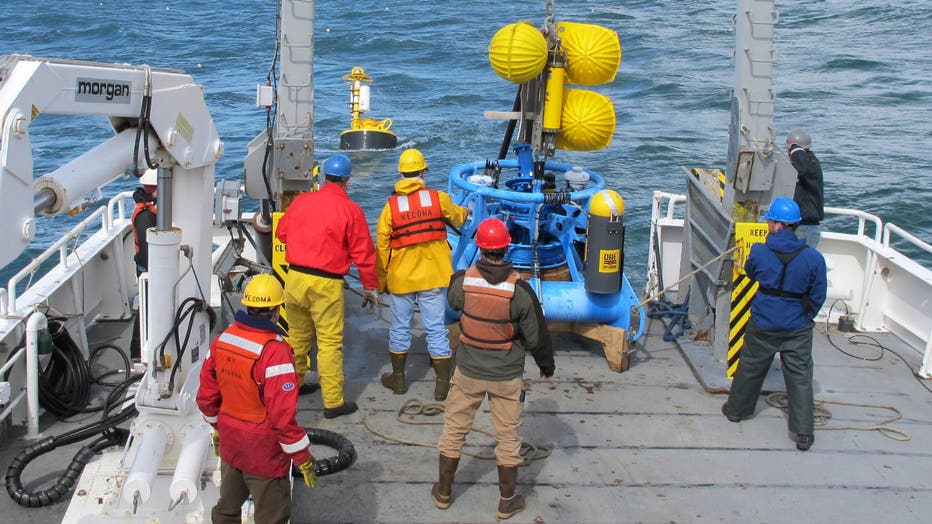
Ocean Observatories Initiative crew prepares to deploy equipment that allows for sensor placement. Credit: Craig Risien, Oregon State University
"We’ve just got to the 10 year record," Dever said, "which will give you some hints, but it won’t continue on."
By the numbers:
The initiative’s annual budget was about $48 million a year, not including the cost of research vessels, which adds substantially to the overall price. Prior to budget cuts, around 60 to 70 people worked directly on the project across its partner institutions, Dever said.
Big picture view:
"What’s happening with the Ocean Observatories Initiative is not unique," Dever said. "This is just one of a number of science facilities that is being dismantled at the present time. It seems to really mark the end of a federal commitment to basic scientific research — a commitment that has served this nation very well for the last 70 years."
The Source: This report includes information from the Ocean Observatories Initiative website, The New York Times and The Associated Press.