

Mideast energy crisis prompts UN to lower 2026 global growth outlook
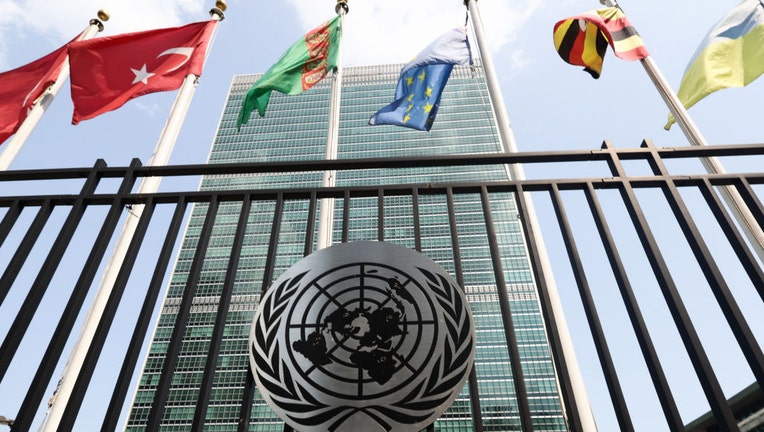
FILE-The United Nations emblem is seen at the United Nations Headquarters building in New York City, United States on July 16, 2024. (Photo by Jakub Porzycki/NurPhoto via Getty Images)
The United Nations lowered its prediction for global economic growth and raised prospects for inflation in 2026 in response to the Middle East energy crisis and high oil prices.
U.N. economists told The Associated Press that global gross domestic product growth is projected at 2.5% this year, adding that it might fall to 2.1%.
How much is global inflation expected to increase?
By the numbers:
According to the Associated Press, global inflation is predicted to spike to 3.9% this year, 0.8% higher than predicted in January, before the U.S. and Israel launched airstrikes on Iran.
Separately, in more developed countries, inflation is forecast to increase from 2.6% in 2025 to 2.9% this year.
And in developing countries, the AP noted that inflation is predicted to jump from 4.2% to 5.2% as rising costs for energy, transportation and imported goods reduce incomes.
Citing the World Economic Situation and Prospects report for mid-2026, the AP reported that the impact of the Iran war has disrupted economic growth for several countries worldwide.
The report noted that in the United States, the economy is expected to have a 2% growth forecast in 2026.
In Asia, its economic growth is only expected to slow from 5% in 2025 to 4.6% this year. While India is projected to continue to be one of the fastest growing major economies.
Additionally, the European Union’s economic growth is predicted to drop to 1.1%. Economic growth in the European Union is expected to drop to 1.1% in 2026, compared to growth in the United Kingdom, which is likely to slide further to 0.7% this year.
The Source: Information for this story was provided by The Associated Press, which cites data from the World Economic Situation and Prospects report for mid-2026. This story was reported from Washington, D.C.