

Global fuel prices spike as Iran targets Gulf refineries
Hegseth warns that US military controls Iran’s fate
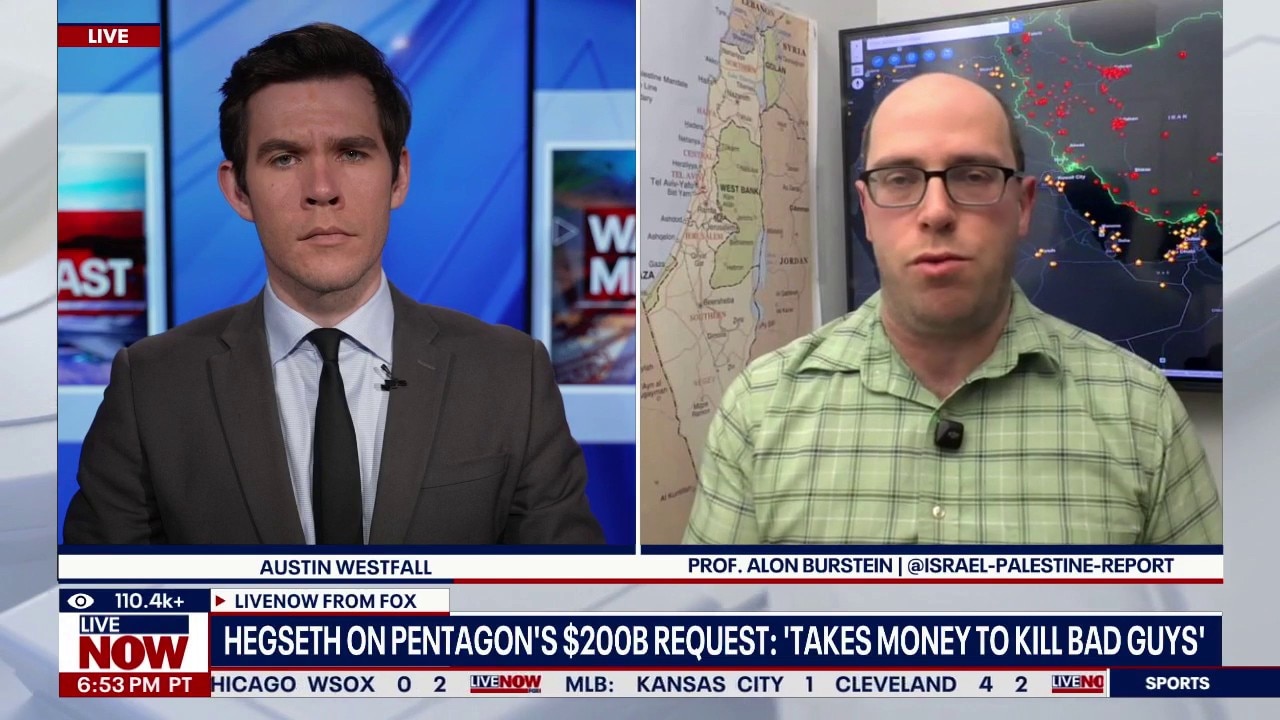
LiveNOW’s Austin Westfall is speaking with Prof. Alon Burstein from the Israel-Palestine-Report, as the impacts of the war in Iran continue to be felt across the Middle East. This includes ongoing impacts to the global price of oil. We are hearing reports that Iran hit a Saudi refinery in the Red Sea and set Qatari liquefied natural gas facilities and two Kuwaiti oil refineries on fire. This attack sent international oil and gas prices soaring on Thursday.
The impacts of the war in Iran continue to be felt across the Middle East and parts beyond as the price of oil surges.
Iran hit a Saudi refinery in the Red Sea and set Qatari liquefied natural gas facilities and two Kuwaiti oil refineries on fire, sending international oil and gas prices soaring on Thursday.
The Associated Press reported that the attacks followed an Israeli attack on Iran's South Pars natural gas field the previous day.
RELATED: Trump threatens retaliation if Iran attacks Qatar again
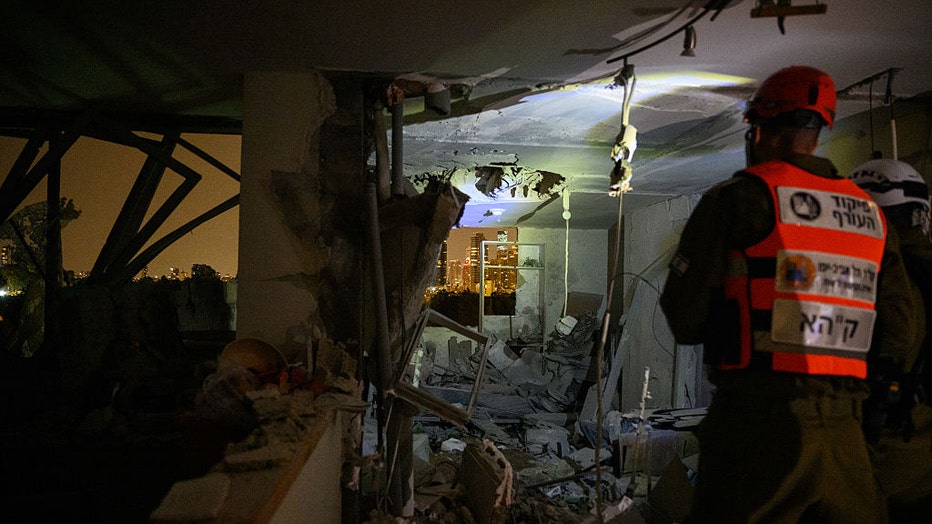
Civil defense workers, and engineers survey damage, including a hole in the roof created from an Iranian Ballistic missile striking the building just before midnight on March 19, 2026 in the Ramat Aviv neighborhood of Tel Aviv, Israel. (Photo by Alex
According to the AP, Brent crude oil, the international standard, soared to as high as $118 a barrel, up more than 60% since Israel and the United States started the war Feb. 28 with strikes on Iran.
The Trump administration is still looking for ways to alleviate prices at the pump for consumers in the United States by easing sanctions and releasing the country’s oil reserves.
Here's a look back at what happened on Thursday:
Israel pledged not to strike Iran's South Pars gas field
8:27 p.m. ET: Israel on Thursday pledged to refrain from executing any more strikes on Iran's South Pars gas field after Iran intensified its attacks on oil and natural gas facilities around the Gulf.
Trump compares Iran attack to Pearl Harbor in meeting with Japan's leader
President Trump hosts Japanese Prime Minister
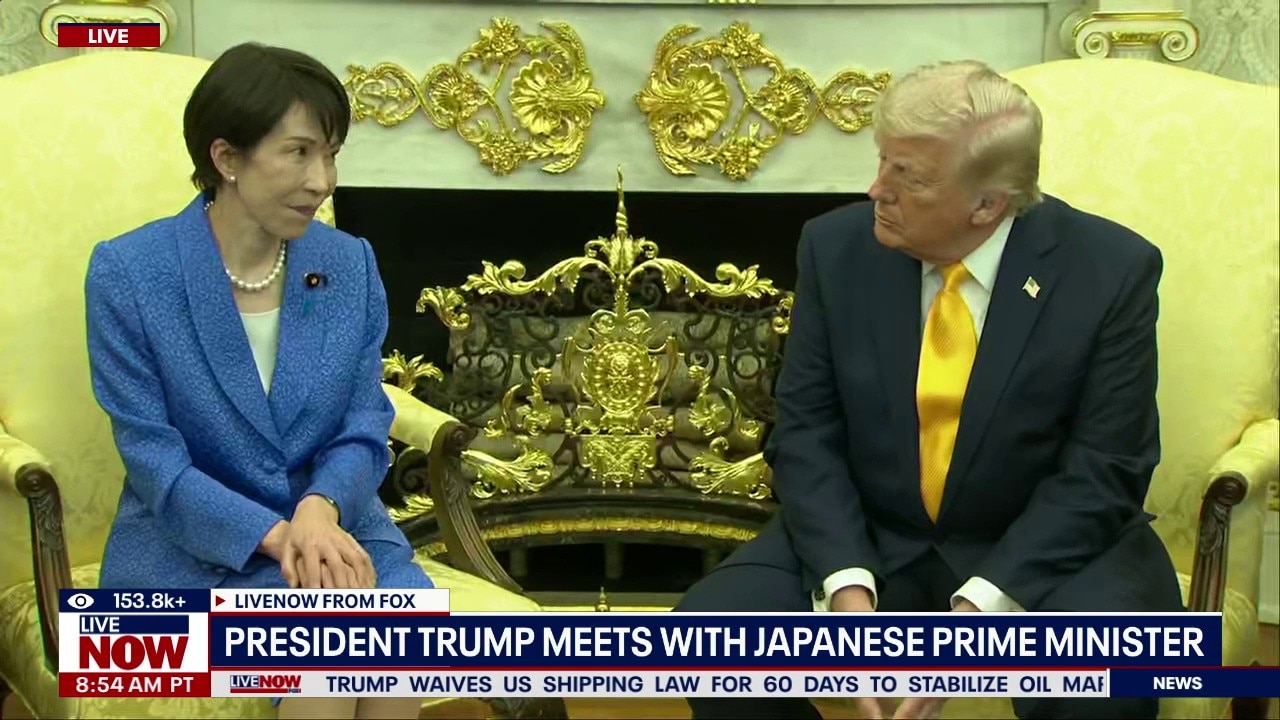
President Donald Trump hosted Japanese Prime Minister Sanae Takaichi at the White House. Trump took questions from reporters about the Iran conflict.
2:40 p.m. ET: While meeting with Japanese Prime Minister Sanae Takaichi in the Oval Office, President Trump was asked by reporters why he didn't coordinate or inform allies, such as Japan, before launching the war against Iran.
"We didn’t tell anybody about it because we wanted surprise," Trump responded, before turning to Japanese Prime Minister and joking: "Who knows better about surprise than Japan? Why didn’t you tell me about Pearl Harbor, OK? Right?"
Takaichi’s slight smile appeared to drop, and she raised her eyebrows.
The Dec. 7, 1941, Japanese bombing of the U.S. Navy base at Pearl Harbor in Hawaii killed more than 2,300 Americans. The U.S. declared war against Japan the next day.
Will Trump deploy US troops to seize Iran’s uranium?
2:30 p.m. ET: President Donald Trump has offered different reasons for joining Israel in launching the war, but he’s consistently said Iran must "never have a nuclear weapon."
The Associated Press reported that much of Iran’s near-bomb-grade nuclear material is believed to be buried under the rubble of a mountain facility hit in U.S. bombings Trump ordered last June.
Seizing or destroying it would be risky, and many nuclear experts told the AP it can’t be done without a sizable troop deployment by the Republican leader who has vowed not to involve the U.S. in another extended Middle East conflict.
US approves $23 billion in arms sales to Arab allies as Iran war escalates
12:50 p.m. ET: In notices sent to Congress on Thursday, the Associated Press reported that the State Department said the U.S. would sell:
To the United Arab Emirates, more than $8 billion in air defense systems and related material, including drones, air-to-air missiles and F-16 fighter jet munitions.
- To Kuwait, $8 billion in missile defense and radar systems.
- To Jordan, $70.5 million of aircraft and munitions support.
Another $6 billion in sales to the three countries was approved but did not require congressional notification because they involved adjustments to previously approved packages or purely commercial sales, a State Department official said. The official spoke to the AP on condition of anonymity because the details of those sales are not public.
Treasury secretary says US is going after Iranian defectors’ money
12:35 p.m. ET: According to the Associated Press, the U.S. says Iranians who allegedly defected from the government or military and transferred money abroad are facing scrutiny from Washington.
"At Treasury, we’ve seen where they’ve wired their money out of the country. We’re coming for that. We’re going to get it back to the Iranian people," Treasury Secretary Scott Bessent said alongside Trump at an Oval Office meeting Thursday.
Trump added that there have also been "a lot of military defections" in Iran. "I don’t blame them for that," he said.
Trump says he urged Netanyahu ‘don’t do that’ amid fallout from Israeli attack on gas field
12:15 p.m. ET: Asked by reporters if he’d spoke to Israeli Prime Minister Benjamin Netanyahu about the attack, President Donald Trump replied, "Yeah, I did, I did. I told him, ‘Don’t do that,'" according to the Associated Press.
Trump continued, "And he won’t do that." But he added, "We’ve- we’re independent. We get along great. It’s coordinated. But, on occasion, he’ll do something. And if I don’t like it. And so we’re not doing that anymore."
According to the AP, Trump appeared to be implying that he’d spoken to Netanyahu only after Israeli forces hit South Pars, the Iranian part of the world’s largest gas field, which is located in the Persian Gulf and owned jointly with Qatar.
A person familiar with the matter told the AP that the United States was informed about Israel’s plans to strike Iran’s massive South Pars natural gas field, but did not take part in the attack.
Hegseth warns that US military controls Iran’s fate
9:45 a.m. ET: The Associated Press reported that Defense Secretary Pete Hegseth warned that Iran should stop targeting neighboring countries with drones and missiles as American forces continue to attack the Islamic Republic.
Sec. Hegseth: "We will finish the job"
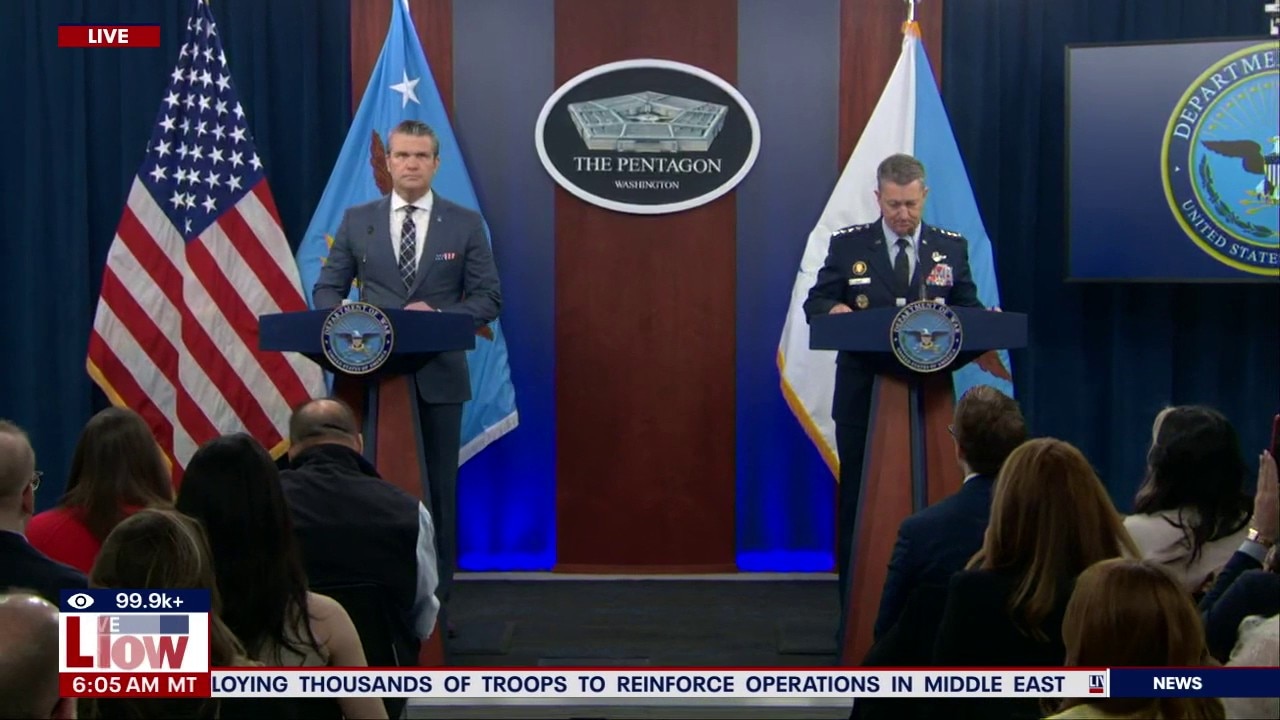
Secretary of War Pete Hegseth delivered remarks Thursday morning, explaining that he assured the families of those fallen service members that Operation Epic Fury will continue until the mission is complete.
"The United States military controls the fate of that country," Hegseth said Thursday from the Pentagon. "Iran has the ability to make the right choices. It should not, going forward, target Arab allies, Arab countries, trying to create pain, the pain that they created themselves."
Gen. Dan Caine, the chairman of the Joint Chiefs of Staff, added that U.S. forces continue to attack deeper into Iranian territory, with A-10 Warthog attack planes hunting Iranian boats in the Strait of Hormuz and Apache helicopters striking Iranian drones. Caine said the U.S. military has also dropped 5,000-pound penetrator weapons into underground weapon-storage facilities.
Pentagon seeks another $200 billion for the Iran war, AP source says
9:35 a.m. ET: According to the Associated Press, the Pentagon is seeking $200 billion in additional funds for the Iran war, a senior administration official says.
The AP reported that the department sent the request to the White House, according to the official, who spoke on condition of anonymity to discuss the private information.
It’s an extraordinarily high number and comes on top of extra funding the Defense Department already received last year in Trump’s big tax cuts bill.
Congress is bracing for a new spending request, but it is not clear whether the White House has transmitted the request for consideration. It is unclear whether the spending request would have support.
Hegseth says US taking ‘countermeasures’ to help Iranians get information
9:15 a.m. ET: The Associated Press reported that Defense Secretary Pete Hegseth said the U.S. was working "to ensure that messaging is delivered, not just to the Iranian people writ large, but to the right audiences, certain audiences that need to hear certain things about what their fate might look like or what their choices are."
An internet blackout imposed by the government in Tehran has impacted almost all communications from the country, making it nearly impossible to reliably survey Iranian perspectives on the escalating conflict.
"Their own people can barely receive a lot of those messages and communicate because of the blackout that they’ve imposed upon them," Hegseth said. "But we work around that for sure."
Caine says US military hit more than 90 targets on Iran’s Kharg Island
8:55 a.m. ET: The Associated Press reported that Gen. Dan Caine, the chairman of the Joint Chiefs of Staff, said Thursday that American forces struck more than 90 targets on Kharg Island, which is vital to Iran’s oil network.
Caine said the U.S. targets included all the island’s military-only infrastructure, such as air defenses, a naval base and mine storage facilities, the AP noted.
According to the AP, Trump said a few days ago that the U.S. military had "totally obliterated" the island’s military assets.
Trump has warned that if Iran or anyone else interferes with ships passing through the Strait of Hormuz, he will reconsider his decision not to target oil infrastructure.
Hegseth says all 11 of Iran’s submarines are ‘gone’
8:45 a.m. ET: Saying that Iran’s "surface fleet is no longer a factor," Defense Secretary Pete Hegseth also said that "their submarines — they once had 11 — are gone," the Associated Press reported.
The crafts Hegseth referenced are "midget" submarines designed to work in shallow waters in the Persian Gulf and its narrow mouth, the Strait of Hormuz.
The small vessels are designed to evade sonar as they lay mines and fire torpedoes.
Hegseth calls senior Iran military posts ‘temp’ jobs as US strikes continue
8:40 a.m. ET: A more top Iranian military leaders are confirmed dead, Defense Secretary Pete Hegseth said anyone appointed to replace them would be in the position temporarily, the Associated Press reported.
"The last job anyone in the world wants right now: senior leader for the IRGC or Basij," Hegseth said. "Temp jobs, all of them."
According to the AP, Israel said Tuesday that it had killed Ali Larijani, a top security official who was believed to be running Iran as it reels from the killing of its supreme leader amid the war. Israel’s military also said it killed Iranian Gen. Gholam Reza Soleimani, who led Iran’s paramilitary Basij, an all-volunteer force fiercely loyal to the Islamic Republic.
Hegseth says Iran operation is not ‘a forever war’ or a ‘quagmire’
8:30 a.m. ET: The Associated Press reported that Defense Secretary Pete Hegseth said the war in Iran is not like those in Iraq and Afghanistan, in which "foolish politicians" such as presidents George W. Bush, Barack Obama and Joe Biden squandered American credibility.
"This is not those wars," Hegseth said during a Thursday briefing from the Pentagon. "President Trump knows better. Epic Fury is different. It’s laser focused. It’s decisive."
Hegseth also described what he says are the war’s objectives, including destroying Iran’s missiles and making sure the Islamic Republic never develops a nuclear weapon.
Hegseth opens Pentagon briefing with remarks about dignified transfer
8:14 a.m. ET: Speaking to reporters at a briefing Thursday, Defense Secretary Pete Hegseth says he told families of service members killed in the Iran war that U.S. forces "will finish this."
According to the Associated Press, Hegseth said they told him "through tears, through hugs, through strength and through unbreakable resolve" that they wanted the U.S. military to "finish this. Honor their sacrifice. Do not waver. Do not stop until the job is done."
"My response, along with that of the president, was simple: Of course we will finish this. We will honor their sacrifice," Hegseth said. "Their sacrifice only steels our commitment."
Hegseth, along with President Donald Trump, paid respects Wednesday at a Delaware military base where the remains of six U.S. service members killed in the crash of a refueling aircraft were returned to their families.
Department of War delivers update on Iran war
8 a.m. ET: The Department of War is providing an update on the war with Iran.
Strait of Hormuz still not open to US
Since the war started, a small number of ships from Iran, Turkey, India and elsewhere have gotten through the Strait of Hormuz, which leads from the Persian Gulf to the open ocean.
Iran insists the waterway is open, just not to the U.S. or its allies.
Trump expressed growing frustration that no allies have offered to help open the strait, posting on social media: "WE DON’T NEED THE HELP OF ANYONE!"
A top British military official, Armed Forces Minister Al Carns, said that any reopening of the strait is a long way off because of threats that include mines, attack boats and drones.
Average gas prices in the U.S. reached
US debt reaches $39 trillion
The national debt surpassed a record $39 trillion on Wednesday, a milestone that comes just weeks into the war.
Big picture view:
The unprecedented figure highlights competing administration priorities, from passing a massive tax law and boosting defense spending and immigration enforcement to chipping away at the debt itself — the latter of which Trump promised to do as both a candidate and as president.
White House economic adviser Kevin Hassett estimated over the weekend that the war in Iran had cost the U.S. more than $12 billion so far, and it is unclear when the war will end.
The U.S. national debt hit $38 trillion five months ago — and $37 trillion two months before that.
The trajectory of the rising debt has continued to grow under both Republican and Democratic presidents, most recently fueled by wars, large-scale pandemic spending and tax cuts.
The Source: Information for this article was taken from The Associated Press and previous reporting by FOX Local. This story was reported from San Jose and Washington, D.C.