

6 planets align in the sky this week: Here’s what to know
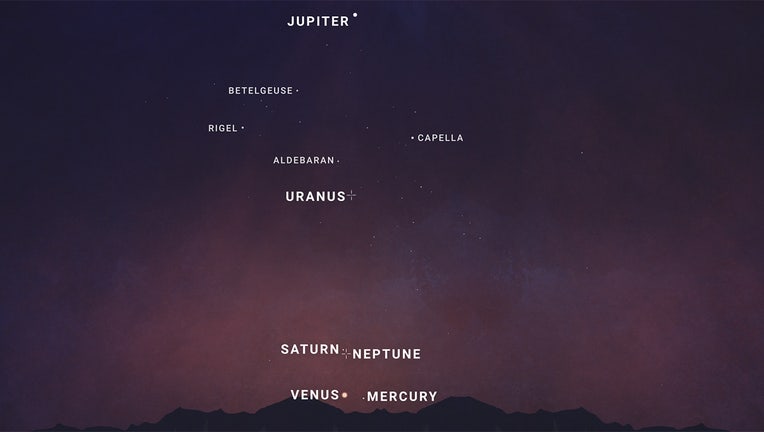
FILE - Artist rendering of a planetary parade on Feb. 28, 2026. (Credit: NASA/JPL-Caltech)
If you’re a fan of gazing into the night sky, get ready for an especially stellar display this week.
Six planets could be visible to the naked eye this weekend, but having a pair of binoculars or even a telescope wouldn’t hurt.
Which planets are aligning?
Mercury, Venus, Jupiter, Uranus, Saturn and Neptune will line up along the ecliptic, forming an arc across the night sky.
Where to look
The biggest challenge with seeing all six planets at the same time is due, much in part, to their placement in the sky in reference to the sun.
Dig deeper:
Venus, Jupiter and Saturn will shine bright and will be easy to spot with the naked eye.
Mercury will appear low near the horizon and may or may not need a telescope to view.
Skygazers will need a telescope or binoculars to see Uranus and Neptune.
Here’s an idea of where to look from west to east facing the horizon, according to the Starwalk website:
- West / Southwest: Mercury, Venus, Saturn, Neptune
- Southwest (higher in the sky): Uranus
- Southeast: Jupiter, close to the bright Moon
What time should I look up?
The best time to catch this parade of planets is just after sunset.
They will be visible for several days before and after Feb. 28, giving sky watchers multiple chances to catch this celestial wonder.
The Source: Information for this article was taken from Earthsky.org, FOX Weather and Space.com. This story was reported from San Jose.