

A solar eclipse is coming Wednesday: What to know and how to watch
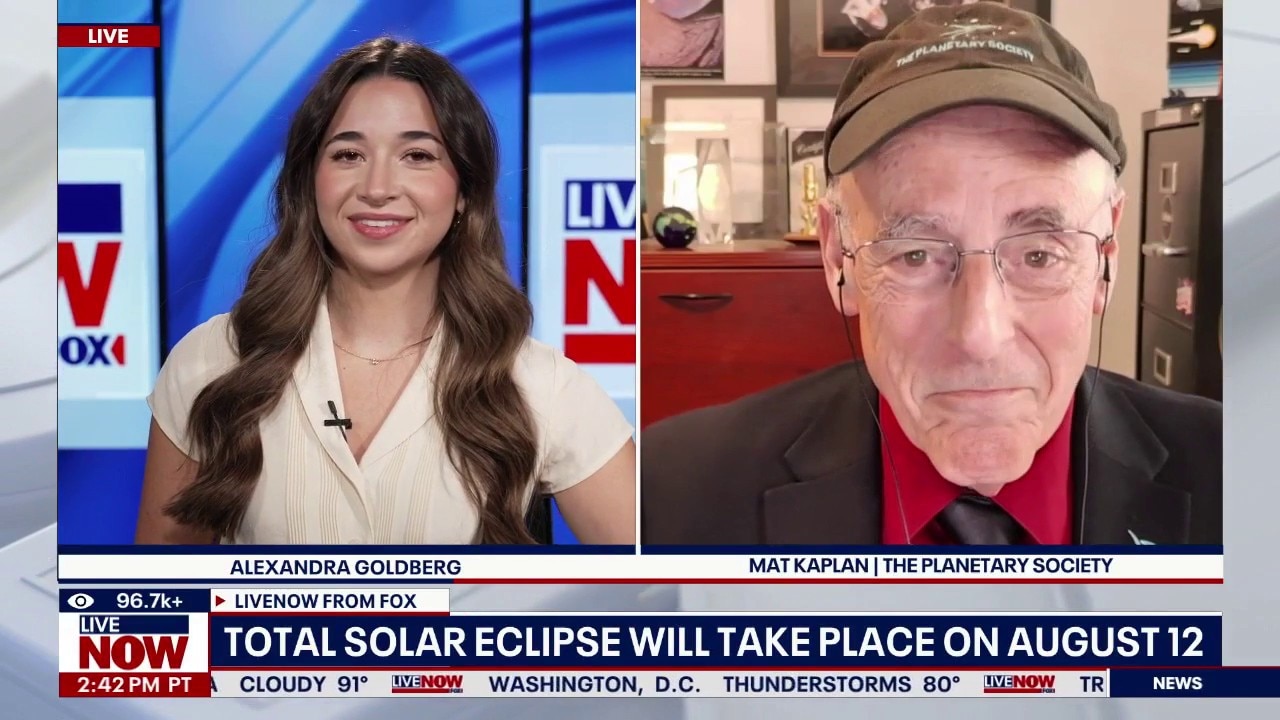
Scientists prepare for solar eclipse coming Wednesday
We are preparing this week to possibly see the solar eclipse that is taking place Aug. 12. Although it won’t be totally visible from the U.S., several northern states will be able to see a partial solar eclipse, according to NASA. Scientists have recently said that they are predicting that parts of the Northern Hemisphere, from Alaska to North Carolina and most of Canada will have an opportunity to experience a partial solar eclipse a little later this week. LiveNOW’s Alexandra Goldberg is learning more tonight from Mat Kaplan with The Planetary Society as scientists prepare to learn all that they can during the event.
A total solar eclipse is taking place Aug. 12, and though it won’t be totally visible from the U.S., several northern states will be able to see a partial solar eclipse, NASA said.
The celestial event will sweep across Greenland, Iceland, northern Russia, the Atlantic Ocean, Spain and a small part of Portugal.
When and where to watch from the US
Local perspective:
Parts of the Northern Hemisphere, from Alaska to North Carolina and most of Canada will have an opportunity to experience a partial solar eclipse.
People hoping to watch the eclipse from North America will be inside the moon’s shadow but outside the path of totality. This means the moon will never completely block the sun and the eclipse will be partial only.
How to see the eclipse safely
What you can do:
During a partial solar eclipse, it is never safe to look directly at the sun without proper eye protection.
Regular sunglasses are not safe, regardless of how dark they are. NASA said safe eclipse glasses should comply with the ISO 12312-2 international safety standard and should not be used if they are torn, scratched or otherwise damaged.
RELATED: See it: Partial solar eclipse puts on a show across New England, Europe
Viewers should not look at the sun through a camera, telescope or binoculars while wearing eclipse glasses. Those devices concentrate sunlight and require specially designed solar filters attached to the front of the equipment.
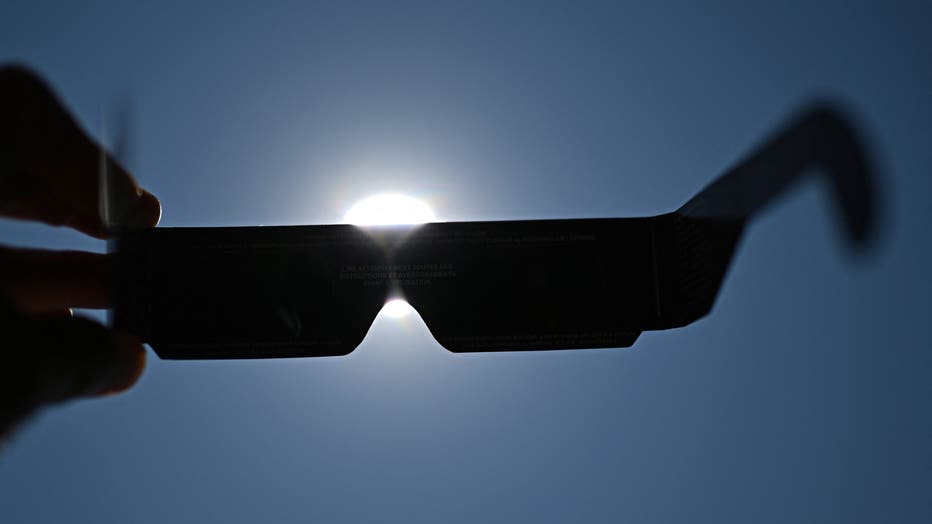
Eclipse-viewing glasses (Photo by Gabriel BOUYS / AFP via Getty Images)
People without eclipse glasses can use an indirect viewing method, such as a pinhole projector. The projector casts an image of the sun onto another surface, so viewers don't have to look directly at it.
RELATED: Photos: Lunar lander gets rare view of eclipse from the moon
For a list of approved eclipse-viewing eyewear, click here.

Animal behavior during the solar eclipse
LiveNOW's Stephanie Coueignoux speaks with Nate Bickford, associate professor at the Oregon Institute of Technology, on how animals will react during the total solar eclipse.
How to watch online
For people outside the path of totality — or those whose view is blocked by clouds – NASA is expected to broadcast the eclipse starting at 1:15 p.m. ET on August 12: https://www.nasa.gov/live.
What is a total solar eclipse?
The backstory:
A total solar eclipse happens when the moon completely blocks the sun from view.
People who are in the direct path of the total solar eclipse can witness the sun’s corona, which is typically too dim to see when it’s not covered, according to NASA.

Total Solar Eclipse: How to keep your eyes safe
Your next chance to view a total solar eclipse in the contiguous United States won't come until 2044.
When is the 2027 solar eclipse?
What's next:
An exceptionally long total solar eclipse is in store for 2027, yielding nearly three times more observation time.
The southern tip of Spain will take center stage on Aug. 2, 2027, with up to six minutes and 23 seconds of totality extending into Morocco, Algeria, Libya, Egypt, Saudi Arabia, Yemen and Somalia.
The Source: Information for this article was taken from NASA’s website, The Associated Press and previous FOX Local reporting. FOX's Tyler Thrasher contributed. This story was reported from San Jose.