

Sierra Nevada raw milk cheese recalled, linked to E. coli outbreak
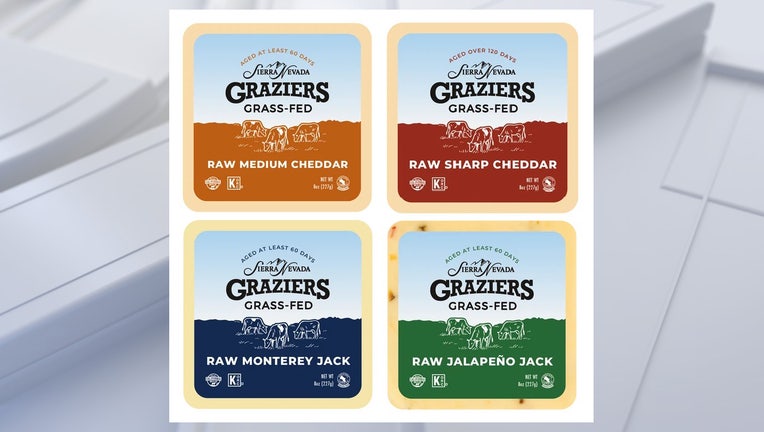
Four varieties of Sierra Nevada Graziers grass-fed raw milk cheeses, medium cheddar, sharp cheddar, jalapeño jack, and Monterey jack, have been recalled after being linked to an E. coli outbreak. (Source: FDA)
Four varieties of Sierra Nevada Graziers grass-fed raw milk cheeses were recalled after being linked to a multi-state E. coli outbreak that has sent at least eight people to the hospital, the Food and Drug Administration reported.
Big picture view:
Sierra Nevada Cheese Company issued the recall on the medium cheddar, sharp cheddar, jalapeño jack, and Monterey jack varieties of its Graziers grass-fed raw milk cheeses. The items were sold in 8-oz and 16-oz packages to consumers, as well as in 5-lb loaves for food service customers and wholesalers, and could be purchased online or in stores across the country.
The backstory:
The recall comes as federal health officials continue to investigate the outbreak. As of Friday, they had identified 13 cases nationwide and added that health officials at the state and local levels are still conducting interviews with people to determine what they may have eaten.
What you can do:
The FDA is warning people not to eat, serve, or sell the recalled cheeses and advises that they can be returned to wherever they were purchased for a full refund. The agency pointed out that the cheeses have a long shelf life, so it is urging consumers who may have purchased any of the cheeses to check their refrigerators or freezers to be sure.
RELATED: Click here to find more recent recalls
Any consumer or business that did buy the now-recalled cheese should clean and sanitize any of the surfaces or containers that it could have touched. The FDA also has published safe handling and cleaning procedures to avoid cross-contamination.
Why you should care:
According to the FDA, symptoms of E. coli can appear a few days after the contaminated food is eaten. They include severe stomach cramps, diarrhea, fever, nausea, and/or vomiting.
The severity of the symptoms can depend on the type of E. coli in the product. Some strains can cause bloody diarrhea and possibly life-threatening conditions, like kidney failure, high blood pressure, neurological problems, and more.
What's next:
The FDA explained that its investigators are still trying to confirm the source of the E. coli outbreak and to determine if any other products were potentially affected.
The Source: Information for this article was taken from the Food and Drug Administration. This story was reported from Orlando.