

Election run offs: What states have them and how they work
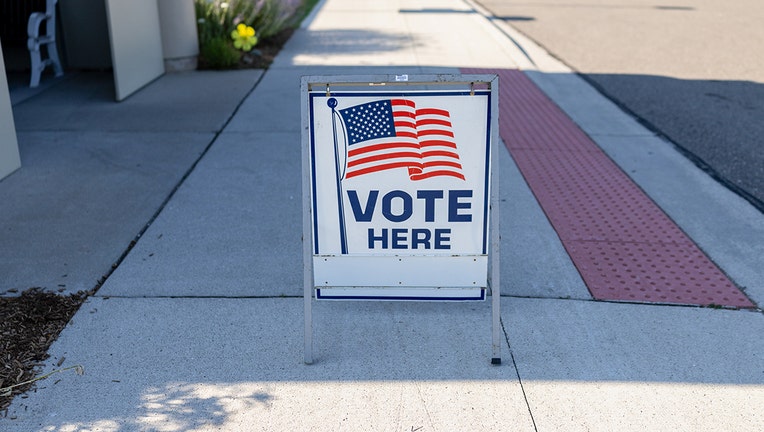
"Vote Here" signage outside a polling location at the Royal Oak Community Center during a primary election in Royal Oak, Michigan, US, on Tuesday, Aug. 4, 2026. (Photographer: Emily Elconin/Bloomberg via Getty Images)
When it comes to runoff elections, laws and systems vary across the country, with each state having its own laws governing recounts in both primary and general elections.
What we know:
The majority of states utilize a plurality system where the candidate with the highest number of votes wins outright, with runoffs triggered only in the event of a tie between the candidates, according to the National Conference of State Legislatures (NCSL).
Runoffs in primary elections
Most states do not hold primary or general election runoffs under normal circumstances. A second election or tie-breaking procedure — such as drawing lots or holding a runoff — is only conducted in the rare event of an exact tie between leading candidates.
Dig deeper:
According to the NCSL, seven states require a candidate to win a primary with a majority of the votes and to make that happen, primary runoff elections are used in Alabama, Arkansas, Georgia, Mississippi, North Carolina, Oklahoma, South Carolina, South Dakota and Texas.
North Carolina and South Dakota require runoffs in special circumstances:
- In North Carolina, a primary runoff is not automatically triggered; it must be requested by a second-place candidate, and the first-place candidate must have received less than 30% of the votes cast.
- In South Dakota, a primary runoff is required if no candidate wins more than 35% of the vote in a race with three or more candidates.
Runoffs in general elections
By the numbers:
According to the NCSL, three states—Georgia, Louisiana and Mississippi—require runoff elections in general elections:
- In Georgia, a runoff election must be held if no candidate receives more than 50% of the vote.
- In Louisiana, the November general election is technically a primary election. If a candidate receives 50% of the vote, they win outright. If no candidate receives more than 50% of the vote, a general (runoff) election is then held between the top two vote getters on the fifth Saturday after the third-to-last Saturday in October.
- In Mississippi, if no candidate for a statewide office receives more than 50% of the vote, a runoff election is held.
Overview of how election runoffs are structured across all 50 states:
The Source: This article includes information from the National Conference of State Legislatures (NCSL), the National Association of Secretaries of State (NASS), and the U.S. Election Assistance Commission (EAC). This story was reported from Orlando.