

Court approves Bayer’s $7.25B Roundup cancer settlement: How much could you receive?
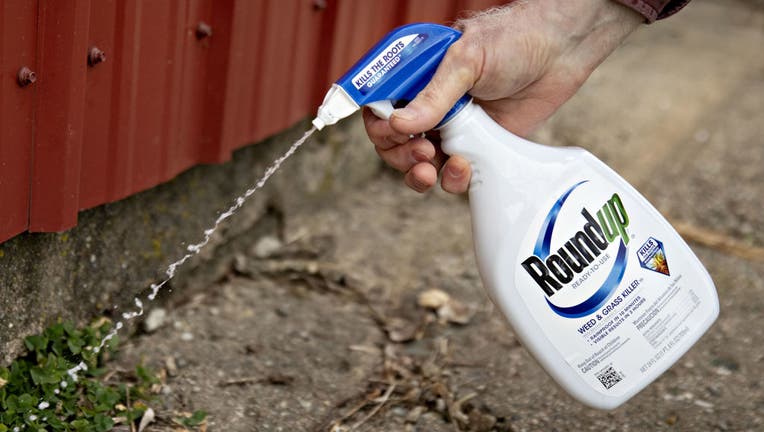
Weeds are sprayed with a bottle of Bayer AG Roundup brand weedkiller in this arranged photograph outside a home in Princeton, Illinois, U.S., on Thursday, March 28, 2019. Photographer: Daniel Acker/Bloomberg via Getty Images
JEFFERSON CITY, Mo. - Bayer will pay up to $7.25 billion over two decades to settle thousands of U.S. claims alleging its Roundup weed killer caused cancer, under an agreement approved Friday by a Missouri judge.
Why you should care:
The nationwide settlement covers people diagnosed with non-Hodgkin lymphoma and those diagnosed in future years who were exposed to Roundup before the deal was proposed in February. Average payments could range from $10,000 to $165,000, depending on exposure, age at diagnosis and illness severity.
RELATED: Marlon Jackson, 69, reveals stage 4 cancer months after onstage fall
The other side:
Bayer denies Roundup causes cancer. The company said the agreement provides financial certainty as it faces mounting litigation costs. The decision could be appealed.
What they're saying:
St. Louis Circuit Judge Timothy Boyer called the average individual payouts "fair and adequate" and the overall agreement "among the largest in the history of mass tort personal-injury class action settlements."
RELATED: 2 ‘forever chemicals’ associated with higher risk of breast cancer: Study
The backstory:
The approval follows a June Supreme Court ruling that Bayer cannot be sued in state courts for failing to warn about cancer because federal regulations do not require such a warning and prohibit states from imposing additional labeling requirements.
Attorneys representing cancer patients disagree over the settlement. Supporters say it guarantees compensation after the ruling weakened their cases, while critics argue payments are too small and restrictions on future claims are too broad.
Bayer previously set aside $16 billion for Roundup-related legal costs. The additional settlement requires annual payments into a fund for up to 21 years.
Monsanto introduced Roundup in 1974 with glyphosate as its active ingredient. Bayer acquired Monsanto in 2018 and has faced about 200,000 Roundup-related claims.
Big picture view:
Glyphosate’s cancer risk remains disputed. The World Health Organization’s International Agency for Research on Cancer classified it as "probably carcinogenic" in 2015, while the Environmental Protection Agency has determined it is unlikely to cause cancer when used as directed.
Bayer has removed glyphosate from new Roundup products sold for residential use.
The Source: The Associated Press contributed to this report. Information in this story came from The Associated Press, which reported on the court-approved Bayer settlement, court records, statements from the company and attorneys, and findings from the Environmental Protection Agency and the World Health Organization’s International Agency for Research on Cancer. This story was reported from Los Angeles.