

Three states set to execute inmates on same day for 1st time in nearly 16 years
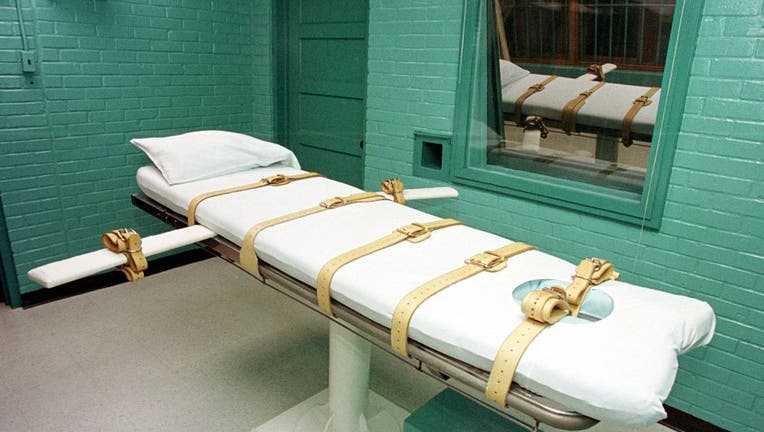
(Photo credit should read PAUL BUCK/AFP via Getty Images)
MONTGOMERY, Ala. - Tennessee, Alabama and Oklahoma are set to execute inmates Thursday, marking the first time in nearly 16 years that three people would be put to death on the same day in the United States.
The executions come as a small number of states, including the three with scheduled lethal injections Thursday, drive execution numbers in the United States.
What they're saying:
"You look at the country as a whole, you’ve just got this little pocket of five or six states that are using the death penalty, executing people, and a small number of states that are still imposing new death sentences," said Robin Maher, executive director of the Death Penalty Information Center. Maher said it is highly unusual to have three executions on one day, although it is largely a scheduling coincidence.
RELATED: Luigi Mangione court hearing fuels speculation of possible plea deal with federal prosecutors
By the numbers:
Eleven states executed a total of 47 people in 2025, the highest number since 2009. Florida accounted for most of the surge with 19 executions. Alabama, South Carolina and Texas each carried out five. Tennessee carried out three. Oklahoma, Mississippi, Arizona and Indiana each carried out two. Louisiana and Missouri each carried out one execution.
The 19 executions so far in 2026 have occurred in four states. Florida, which again leads the country, executed two inmates on the same day in July.
The last time three executions were held on the same day was Jan. 7, 2010, when Louisiana, Ohio and Texas put inmates to death. Three executions were scheduled on the same day in 2018, but only one went forward after a Texas man was granted a reprieve and prison officials in Alabama had problems with the IV line.
RELATED: WA Costco employee fatally rammed car into co-worker after seeing hug
Dig deeper:
Tennessee plans to execute Anthony Darrell Hines three months after the attempted lethal injection of another inmate was called off because of problems inserting an IV. The aborted execution put a spotlight on issues states have sometimes had in establishing IV lines during lethal injections.
Hines, 66, has seized on the problems with the previous execution, saying his health issues — including two strokes that left him partially paralyzed — increase the risk of difficulties at his execution. He has unsuccessfully asked the governor and courts to intervene, claiming the doctor who oversaw that execution was unqualified and is likely to botch his execution, as well.
Hines was convicted of stabbing Catherine Jean Jenkins to death in 1985 while the 54-year-old was working as a motel maid in Kingston Springs. He was sentenced to death in 1986, won an appeal for a new sentencing hearing, and was again sentenced to death in 1989.
Alabama is scheduled to execute Jeremy Williams, 42, by lethal injection for the 2021 rape and murder of a 5-year-old Georgia girl.
Williams, who pleaded guilty to killing Kamarie Holland, has asked for his death sentence to be carried out.
Prosecutors said Williams raped and strangled Holland after offering her mother $2,500 for the child to perform oral sex on him. Williams filmed his attack on the girl and kept her body to continue to abuse, prosecutors said.
In 2022, Williams also was charged with the 2005 death of his infant daughter in Alaska.

Firing squad is a legal execution method in Utah
Dennis Romboy of Desert News joins LiveNOW from FOX to discuss possible execution methods that Tyler Robinson may face, since Utah officials have announced they will pursue the death penalty in the assassination of Charlie Kirk.
Oklahoma is scheduled to execute Carlos Cuesta-Rodriguez, 70, for the 2003 murder of his girlfriend.
If the lethal injection goes forward, he will be the third person executed in Oklahoma this year.
Prosecutors said Olimpia Fisher, 43, had been making plans to leave Cuesta-Rodriguez when he shot her in one eye and then waited about eight minutes as she screamed for help before firing the fatal shot into her other eye.
Oklahoma’s Pardon and Parole Board voted 3-1 last month against recommending clemency for Cuesta-Rodriguez. Cuesta-Rodriguez’s attorneys had asked the board to recommend he serve life in prison without parole, saying he had a difficult childhood and suffered from brain damage, post-traumatic stress disorder and major depression with psychotic episodes.
But Cuesta-Rodriguez told the board that he did not want clemency. He said he wanted Fisher’s two daughters to know that he regretted what happened.
The Source: The Associated Press contributed to this report. The information in the story comes from the Associated Press, including reporting by Kim Chandler, Travis Loller and Jamie Stengle. This story was reported from Los Angeles.