

New Trump tariffs: President imposes double-digit levies as temporary tariffs expire
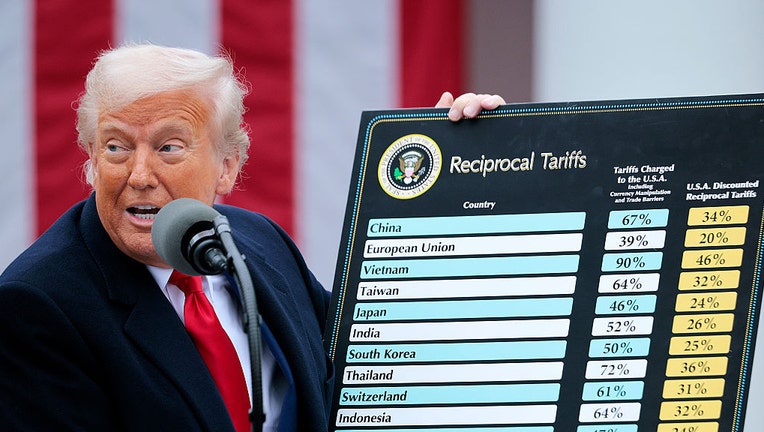
U.S. President Donald Trump holds up a chart while speaking during a "Make America Wealthy Again" trade announcement event in the Rose Garden at the White House on April 2, 2025 in Washington, DC. (Photo by Chip Somodevilla/Getty Images)
WASHINGTON - President Donald Trump is moving forward with new double-digit tariffs on dozens of U.S. trading partners as temporary levies he imposed following a Supreme Court setback are set to expire Friday.
The United States will slap taxes of 10% to 12.5% on imports from 60 countries accounting for 99% of U.S. imports, charging that they have inadequately enforced bans on goods produced by forced labor.
What they're saying:
"The United States has had a forced labor import ban for nearly a century, and rigorously enforces it; it’s well past time for our trading partners to do the same," said U.S. Trade Representative Jamieson Greer. "Today’s action will begin to correct what is both a human rights abuse and distortive trade practice to improve the welfare of workers everywhere.
RELATED: 50% tariffs slapped on hundreds of Canadian imports: Here's a list
What's next:
The new tariffs will take effect just as temporary 10% worldwide tariffs expire at 12:01 a.m. Friday. Trump had turned to those temporary levies after the Supreme Court struck down his biggest and boldest tariffs in February.
Now he's tapping more durable tariffs under Section 301 of the Trade Act of 1974, which permits the president to impose import taxes and other sanctions against countries found to engage in "unjustifiable," "unreasonable" or "discriminatory" trade practices. Trump used Section 301 to impose big tariffs on China in his first term, and they survived court challenges.
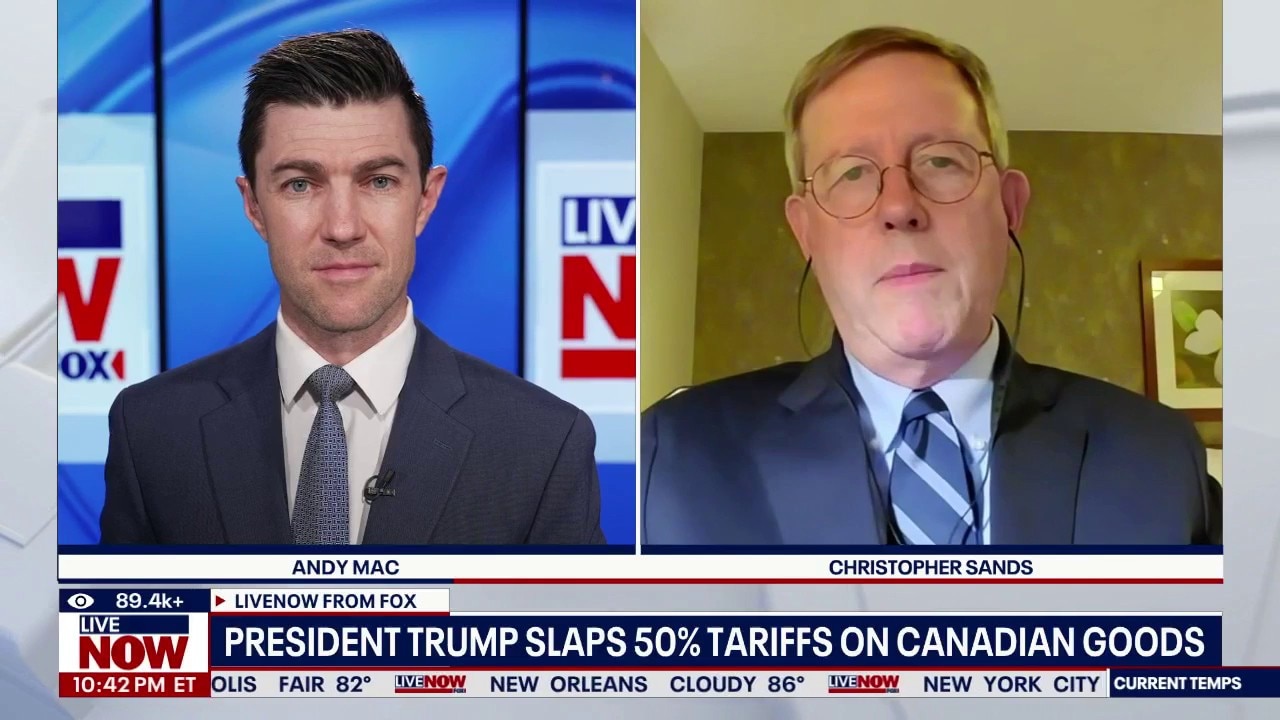
Trump slaps tariffs on hundreds of Canadian goods
Christopher Sands, director at the Center for U.S.-Canada studies at Johns Hopkins University, joins LiveNOW's Andy Mac to discuss President Trump's announcement that he is imposing a 50% tariff on hundreds of Canadian goods.
More Section 301 tariffs are likely coming: The U.S. Trade Representative’s office has launched a probe into whether 16 countries — accounting for 70% of U.S. imports — have overproduced goods, pushing down prices and putting U.S. companies at a disadvantage in global markets. The administration has yet to complete that investigation.
RELATED: US hits Brazil with 25% tariffs after trade practices investigation
The backstory:
Trump, who argues that high tariffs will revive American manufacturing, last year overturned decades of U.S. policy that favored lower tariffs and ever-freer trade. Invoking the 1977 International Emergency Economic Powers Act (IEEPA), he imposed double-digit tariffs on imports from almost every country on Earth, saying America’s longstanding trade deficit amounted to a national emergency.
But the Supreme Court ruled that IEEPA did not authorize tariffs. The decision forced the administration to pay refunds to importers that had paid the tariffs.
In response, Trump announced 10% worldwide tariffs under Section 122 of the Trade Act of 1974. But he can only use Section 122 levies for 150 days; time runs out on them Friday.
The administration initially proposed the forced labor tariffs last month. Since then, some countries have tightened forced labor enforcement and qualified for lower tariffs, said a senior administration official who spoke under condition of anonymity. For example, the official said, the tariff on imports from India initially was set at 12.5% but now will be 10%.
Some products — including oil and gas and fertilizer — are exempted from the new tariffs announced Thursday. Also being spared are products that qualify for duty-free status under the US-Mexico-Canada Agreement, the North American trade pact Trump negotiated in his first term.
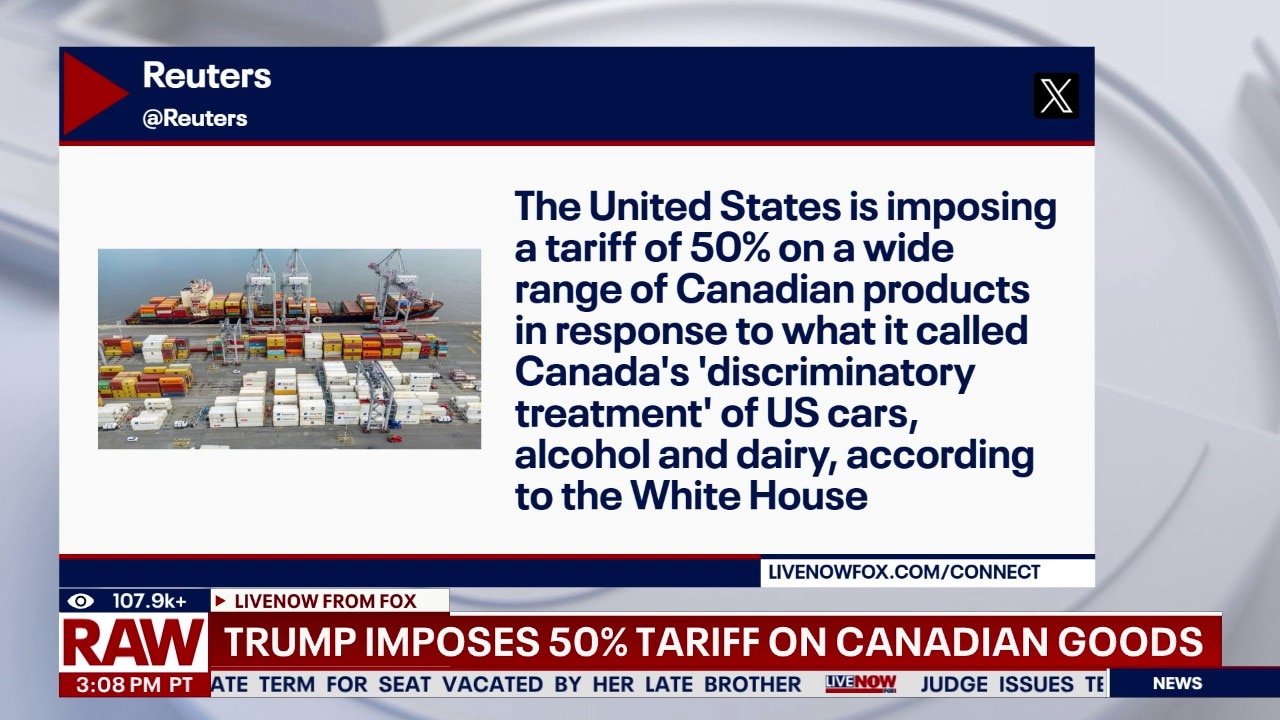
Trump imposes 50% tariff on some Canadian goods
We are now learning that the Trump administration is planning to impose a 50% tariff on certain Canadian imports. This comes as members of the Trump admin officials blame "discrimination" against American businesses as the reason behind the decision. "I find that it is necessary and appropriate and in the public interest to impose an additional ad valorem duty of 50 percent on certain products of Canada," the order said, according to Fox Business.
Why you should care:
Tariffs are paid by companies in the United States that import foreign products. The importers usually try to pass along the cost by charging consumers higher prices. Americans are already frustrated by the high cost of living. So the administration is taking a risk in rolling out new tariffs ahead of the Nov. 3 midterm elections.
The other side:
Human rights watchers say that it’s reasonable to be skeptical of the motivation behind the tariffs. But they say the levies could make an impact on the problem of forced labor.
Forced labor is defined by the International Labor Organization Forced Labor Convention of 1930 as "all work or service which is exacted from any person under the menace of any penalty and for which the said person has not offered himself (or herself) voluntarily."
The Source: The Associated Press contributed to this report. The information in this story comes from announcements by the Trump administration and the Office of the U.S. Trade Representative, including statements from U.S. Trade Representative Jamieson Greer and a senior administration official. This story was reported from Los Angeles.