

GLP-1 drugs show promise in treating common hormonal disorder
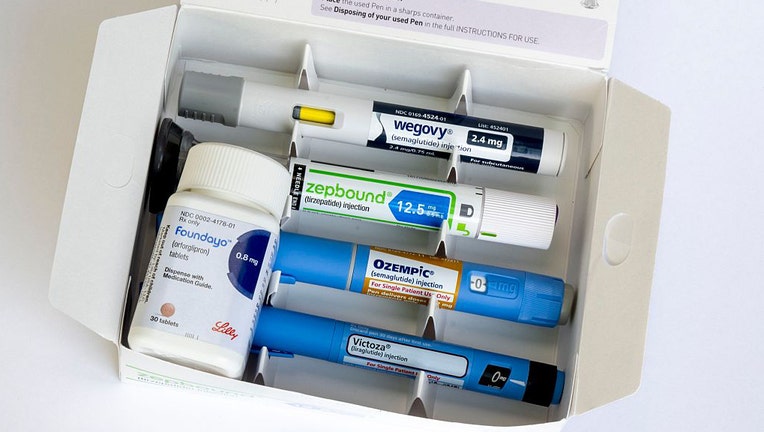
FILE-In this photo illustration of a group of weight loss medications on a white background. (Photo by: Michael Siluk/UCG/Universal Images Group via Getty Images)
Recent studies were performed to test GLP-1 drugs as a treatment.
Some research shows that these obesity medications could work against the hormonal disorder known as PMOS — not only by touting weight loss but also bolstering insulin resistance, hormone balance and ovulation.
The Associated Press reported these traits are primary to the disease, which used to be known as polycystic ovary syndrome but was renamed to divert the attention away from ovaries and cysts.
GLP-1 drug-PMOS study
Dig deeper:
Initial data from the study, published in the journal Fertility and Sterility in June, found that eight of 11 participants completing the trial lost roughly10% of their body weight.
Citing the study, the AP reported that the median weight loss among them was about 42 pounds; the median drop in testosterone was 52%. Six women had more periods and four of them went to monthly periods.
Dr. Melanie Cree, PMOS clinic director at Children’s Hospital Colorado, who has led three studies testing GLP-1 drugs for PMOS shared with the AP that most women with PMOS have insulin resistance, which means this hormone doesn't work as well as it should.
RELATED: Medicare rolls out $50 GLP-1 drug program: What to know
In all three of Cree’s studies, women on GLP-1s lost more weight than those in control groups, and levels of testosterone, blood sugar and insulin lowered. While one study examines semaglutide shots, the other studies assess semaglutide pills in one and exenatide shots in the other, the AP noted.
Semaglutide is classified as a medication known as GLP-1 receptor antagonists. It mimics the GLP-1 hormone, released in the gut in response to eating, according to UCLAHealth.org.
Separately, other studies have shown similarly positive results. Despite the studies being small, some researchers told the AP that GLP-1s are already showing promising potential for targeting metabolic issues in PMOS. But others assert that the proof is uncertain, and more studies are being performed.
As research continues, more physicians are prescribing the drugs "off label" for PMOS and observing improvements in their patients. But the AP reported that insurance coverage is often a problem because the drugs are not approved to treat the condition.
What’s known about PMOS?
Dig deeper:
Polyendocrine metabolic ovarian syndrome or PMOS refers to a set of symptoms caused by a problem with a woman’s hormones. According to Johns Hopkins Medicine, PMOS impacts the ovaries. These are the small organs that store a woman’s eggs. But PMOS can also impact the rest of the body.
A PMOS diagnosis can take years because symptoms overlap with other conditions and may be overlooked by doctors.
According to The Associated Press, PMOS tends to run in families, and some women impacted carry excess weight. However, there’s no known cause or specific treatment, just symptom management like taking birth control pills to control periods and regulating weight with diet and exercise.
Two hormones are primary drivers of PMOS, which are insulin, which acts as a key to let blood sugar into cells, and testosterone, which helps maintain sexual desire, bone density and muscle mass.
The AP noted that in many women, the high insulin can go directly to the ovaries, causing them to make more testosterone and leading to problems like skipped periods, severe acne and even beard growth.
The Source: Information for this story was provided by The Associated Press and UCLA Health. This story was reported from Washington, D.C.