

Dogs know their humans so well – and that starts early in life, expert says
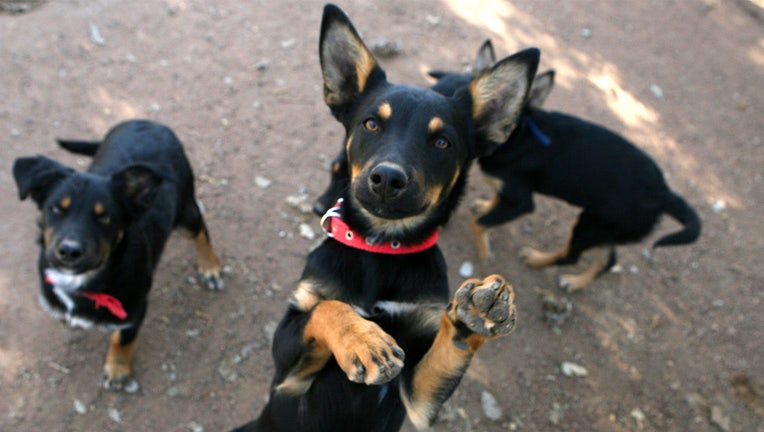
Four-month-old kelpie puppies play at the Winona Kelpie Stud near Gulgong, New South Wales, 13 July 2006. SMH Picture by PETER MORRIS (Photo by Fairfax Media via Getty Images/Fairfax Media via Getty Images via Getty Images)
For millions of people, their dogs are one of the biggest parts of their lives. They shower their pets with love and are certain their canine companions love them back. Unfortunately, because man’s best friend can’t tell them, owners are left wondering what’s on their minds.
Big picture view:
How a dog thinks and how it relates to people come down to several influences, including ones that happen very early in life. Like the rest of us, physical activity also plays a big part in healthy aging for dogs.
What they're saying:
University of Arizona College of Veterinary Medicine assistant professor Emily Bray has been studying how dogs think, how they solve problems, and how they see the world.
"So basically, I get to play games with dogs for science," Bray explained. "The other cool thing about dogs is that they are often attached to humans who can talk, so we can think of creative ways to query the owners or the trainers and get information about their behavior that way."
For Bray, her work will help owners set up their four-legged friends for success and improve their relationships. She pointed out that dogs excel at social cognition and picking up communicative cues from their owners.
Playing with 300 puppies
"I think one of my absolute favorite findings, and not just because I got to play with 300 puppies to discover it, was that they truly do seem like they come out prepared to follow our cues," she continued. "And this is before they've had training."
According to Bray, that ability in dogs begins even before a puppy has interacted much with people, when its main interactions were with other dogs. She described the puppy as having a deep understanding of what the human is trying to communicate.
Mom knows best
A puppy’s interactions with its mother very early in life is essential for building good behaviors later in life. Bray worked with puppies from the time they were 2 weeks old, even before they opened their eyes, and found the ones with more interactive mothers ended up being worse guide dogs.
She suspects that is because they did not build independence and traits that would serve them as working dogs later in life.
Getting physical
Bray examined questionnaires completed by owners for the Dog Aging Project and discovered that physically active dogs were cognitively healthier and less likely to develop canine cognitive dysfunction when they got older.
"What we can't say at this point is if that is a causal relationship, so we are currently working on future studies to start to tease that apart more," she added.
RELATED: Five-minute walks beat one 45-minute walk for steadier blood sugar, study finds
What's next:
Recounting all of the times proud dog owners showed her pictures of their fur babies and talked about how important their pets are to them, Bray said the reality is more complex.
Bray noted some studies have found dog owners have lower rates of loneliness and depression, but there are others that did not see that happening. She explained that her field in general has shifted from the idea that having a dog is universally good and is now focused on how dogs and their owners can get the most out of their relationships.
The Source: Information for this article was taken from an interview with University of Arizona College of Veterinary Medicine assistant professor Emily Bray and The Associated Press. This story was reported from Orlando, Fla.